
This tour is four and a half hours and moves at a slow, chill pace.
If you're deciding between this and Off the Beaten Track, here's the difference. This tour walks the same back streets, then adds the big District 1 landmarks on top. Off the Beaten Track takes 2.5 hours, while this one takes 4.5 hours. If the tourist attractions don't interest you or if you have seen it already, book the short one instead, or just message me and we can spend our entire tour exploring more hidden gem areas ☺️
If 4.5 hours is too long, City Highlights & Hidden Gems is 3.5 hours. Book it private and you can add or swap stops.
Most of our time still goes to the non-touristy places. An apartment block from 1968 that guests remember more than anything else. A bunker dug under a family house. Two street markets, a flower market, a cafe run by three sisters, a temple. Fruit and snacks on the way…

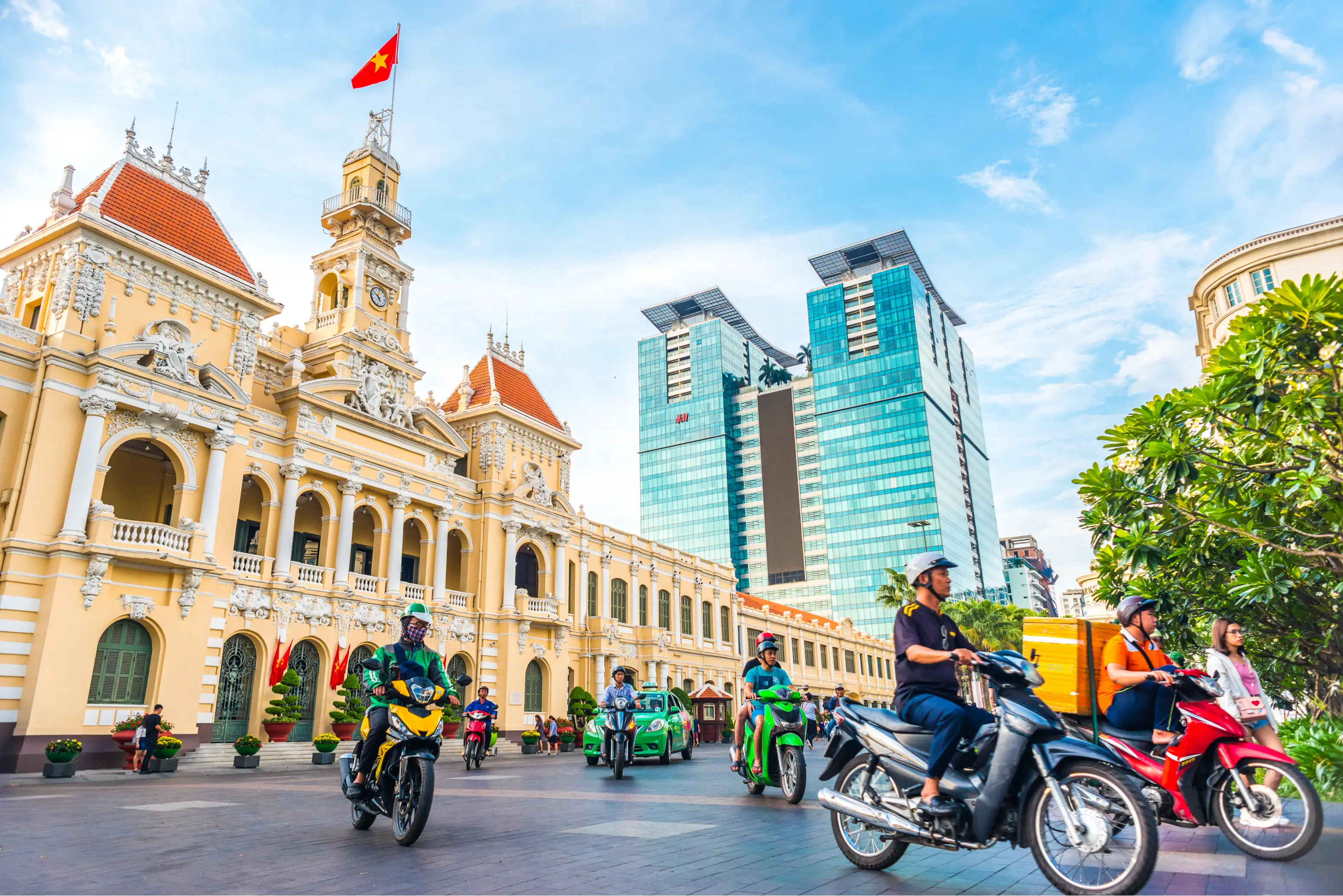
The famous buildings are in there too, because most people want to see them once, and that's fair.
You can eat before we meet, or we can have lunch during the tour, it's up to you.
So we need to be a little flexible with the order; it depends on the traffic and on what's open that day. Between stops, we cut through the hẻm, the alleys, whenever one goes our way. It's slower than the main road. It's also where most people in this city actually live.


Nguyen Thien Thuat apartments
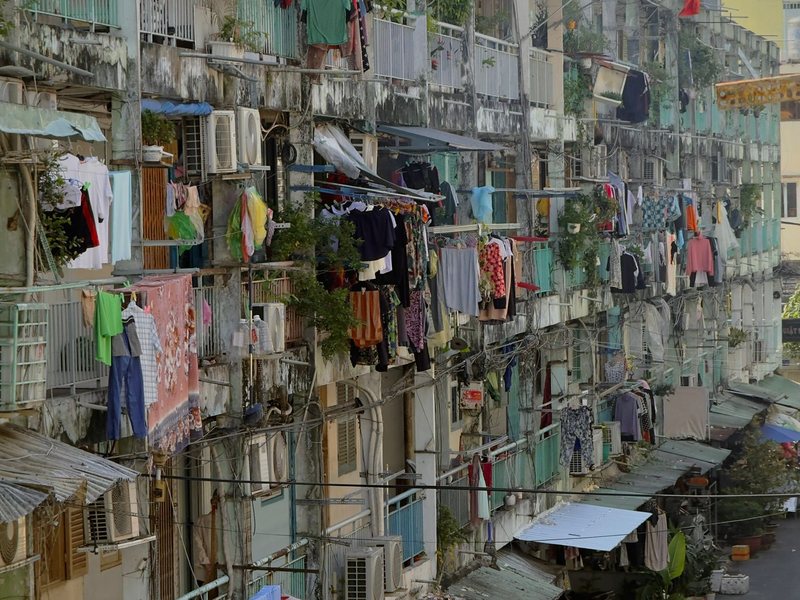
If my guests remember one place from this tour, it's this one. It's 11 blocks with nearly 1,400 flats, built in 1968. Blocks like these are called cư xá, the earliest kind of apartment building in Vietnam. After 1975 a lot of cư xá were taken over by the state and the flats were shared out again, so more people ended up living in them than they were built for.
There's a pagoda on the third floor. It's called Liên Trì, and it was around before the blocks were. When they went up, the monk in charge, Thích Minh Cảnh, picked the third floor for it, because a pagoda isn't supposed to sit underneath people's homes. Neighbours still call it the "three sisters" pagoda, after three sisters who came to practise there.

Do Phu bunker cafe
In the 1960s this was the house of Trần Văn Lai, a well-off building contractor who, in secret, moved weapons into the city for the biệt động, the Saigon commandos. Under the floor, he dug a place to hide them.
His cover was a fake affair. His partner in the work, Đặng Thị Thiệp, played the part of his second wife. The neighbours gossiped about the affair. Nobody suspected the digging. The soil went out early in the morning, hidden in bags in his car, an old French Citroën. In 1968 the same car carried the weapons out for the Tet Offensive. It's on display in the house now.
The bunker is 2.5 metres high, so you can stand up in it. The house became a national historic site in 1988, and the family runs it as a cafe.

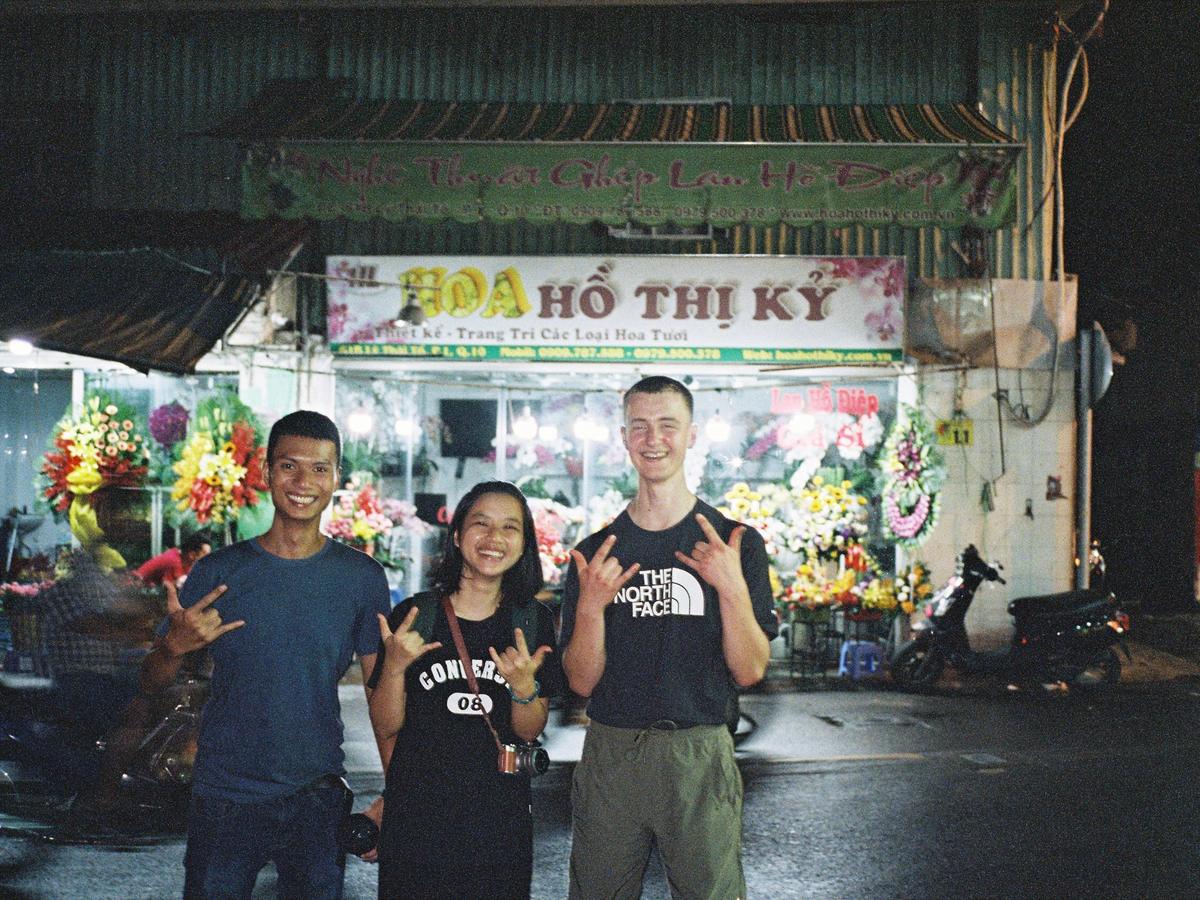
Ho Thi Ky flower market
A wholesale flower market that's been running since 1987, with around a hundred stalls spilling onto the street. In the daytime people come to buy a bunch or two.
Right next to it is a market people call phố Cam, Cambodia street. Vietnamese families who left Cambodia in the 1970s settled here, and they still sell Cambodian food, like dried fish from the Tonlé Sap and bún num-bo-chóc, a rice noodle dish.
Ban Co market
The neighbourhood market for the streets around the apartments. In the 1950s people moved into this area from all over: clerks, nurses, teachers, students and a lot of poor families.

Ton That Dam market
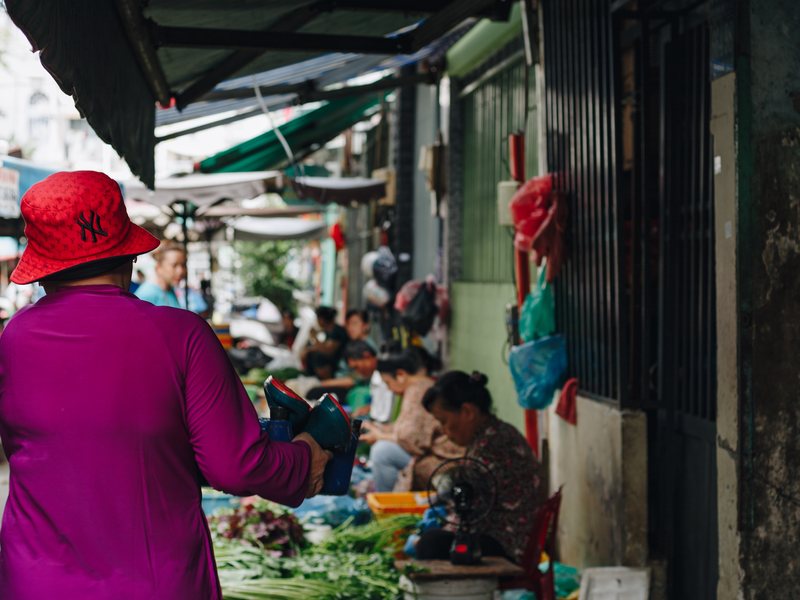
Back in District 1, a street market roughly 200 metres long, where each stall is about 80 centimetres wide. Saigonese call it chợ Cũ, the old market. In the 1800s this was where the canals brought the city's trade in. When Bến Thành opened in 1914 as the new market, this one became the old one, and the name stuck. It's also been called chợ nhà giàu, the rich people's market, after the customers it used to pull in.
Cheo Leo cafe
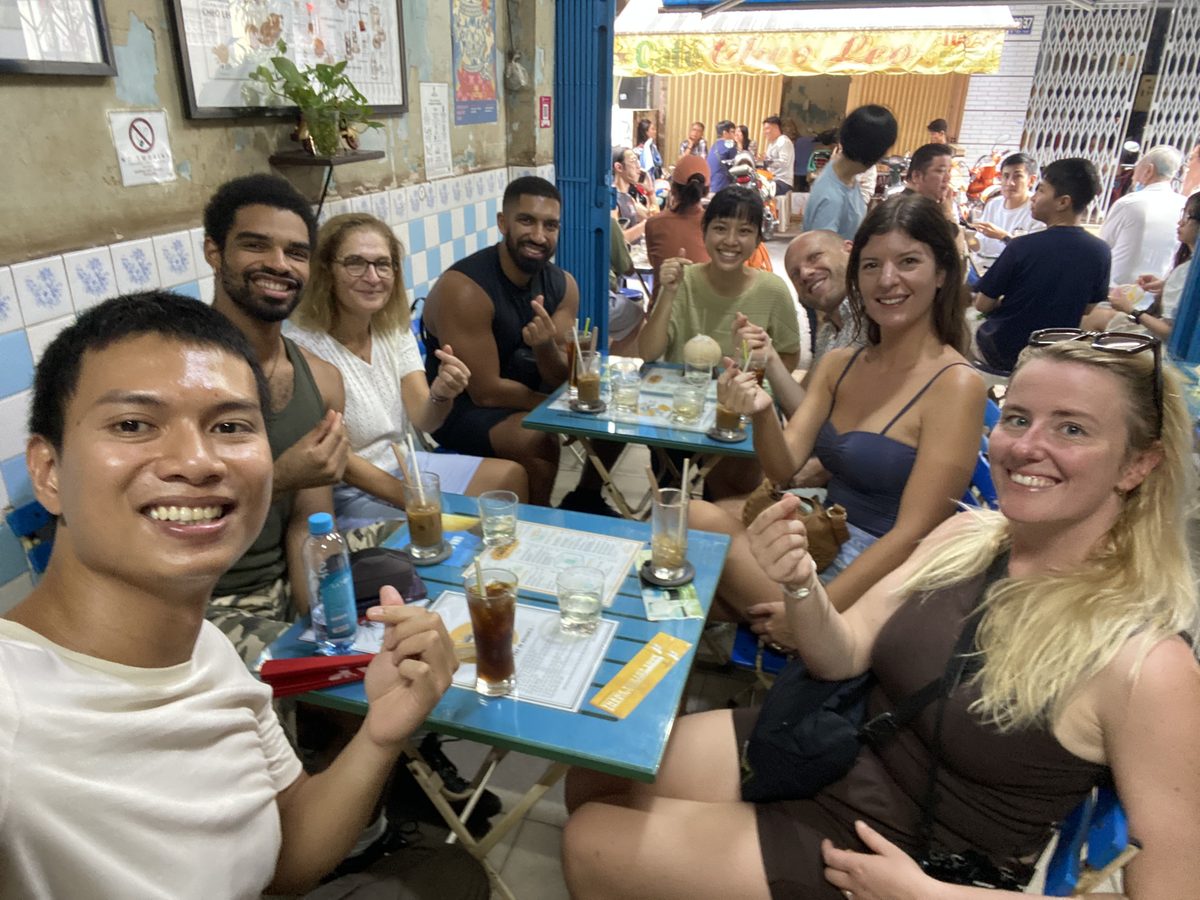
We will try very good coffee at this place. Cô Sương and her two sisters run it. Their father started selling cà phê vợt here in 1938, and most of the customers are regulars. Some of them have been coming for decades.
Thich Quang Duc monument
On the corner of Cách Mạng Tháng Tám and Nguyễn Đình Chiểu. This is where Thich Quang Duc, a Buddhist monk, burned himself to death in June 1963, in protest at how the Diem government treated Buddhists. The monument has stood here since 2010. We will stop for a few minutes.
Viet Nam Quoc Tu temple
Thich Quang Duc's heart is kept here. It was left after his cremation and has been treated as a relic ever since. For years it sat in a vault at the State Bank. In May 2025 it was brought here, and on some days up to 60,000 people came to see it. On 29 December 2025 it was placed in the temple's tower for good.
Fruit Tasting 🍈
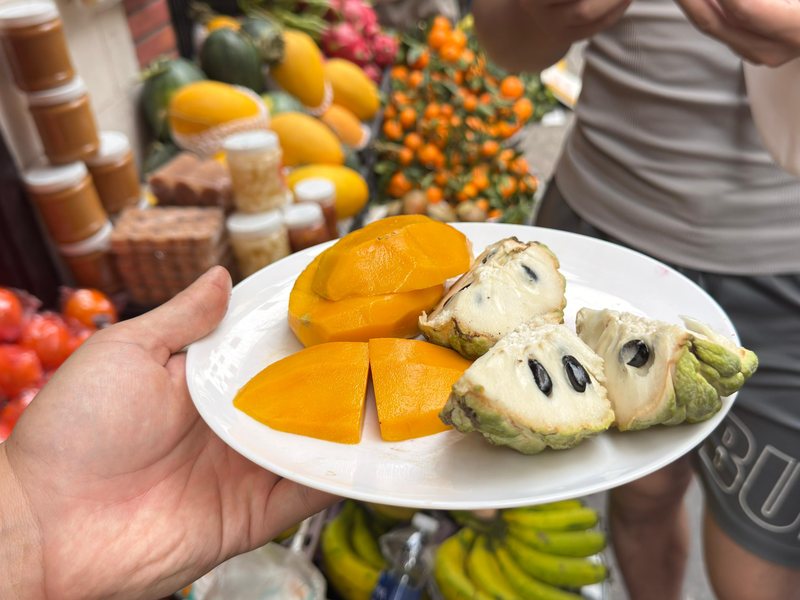
Somewhere along the way we stop for yummy exotic fruits. Chôm chôm (rambutan), nhãn (longan), mãng cầu (custard apple), and whatever else is in season that week.
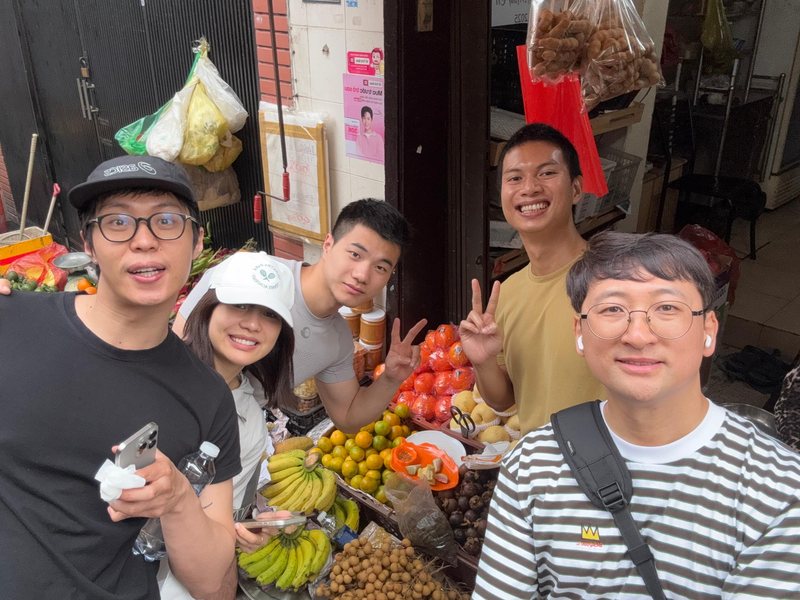
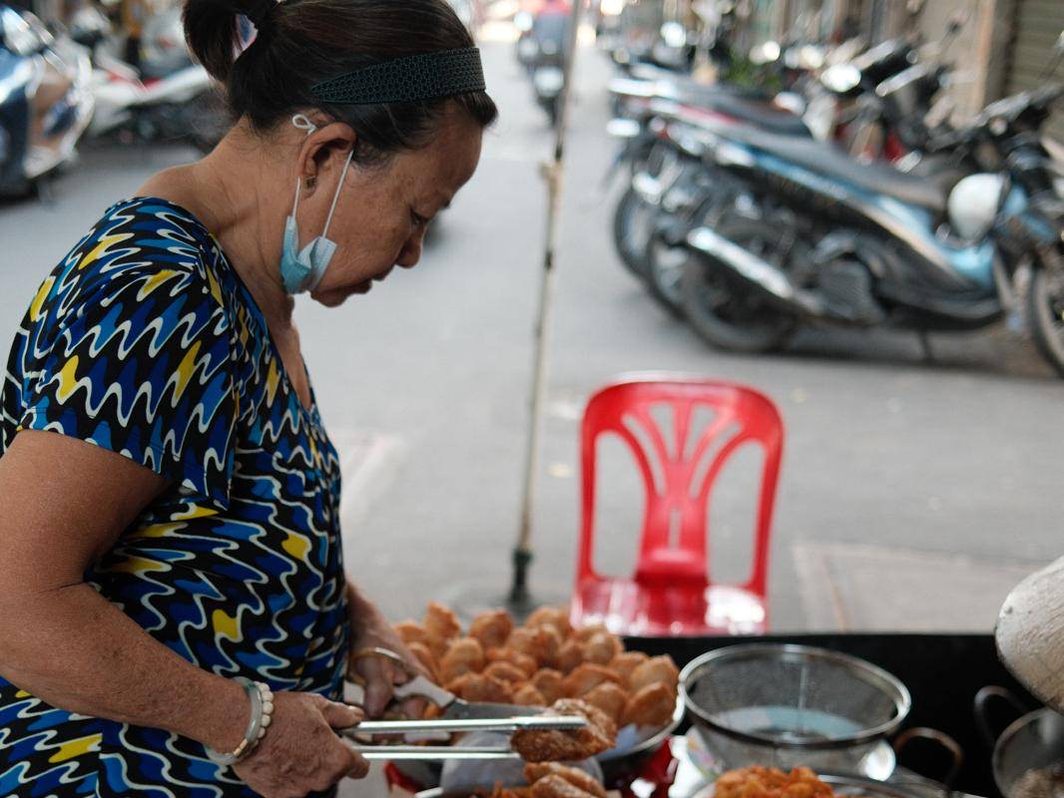
Snacks and drinks. Those come along the way too, depending on what's good that day. Coffee at Cheo Leo is on me.
The landmarks are a few minutes apart, so this part is one slow walk. We stop at each one, not for long.
Nguyen Hue walking street
The wide pedestrian street running from City Hall down to the river. It fills up in the evening.
Cafe Apartment, 42 Nguyen Hue
Nine floors of flats from the 1960s, and nearly every one is a cafe or a shop now. We see it from the pavement. We usually don't go up but we can go up for a good coconut coffee if you would like to :)
City Hall
The French called it the Hôtel de Ville. Work started in 1898 and it opened in 1909. Since 1975 it's been the city's People's Committee building, so it's a working office and we see it from outside.
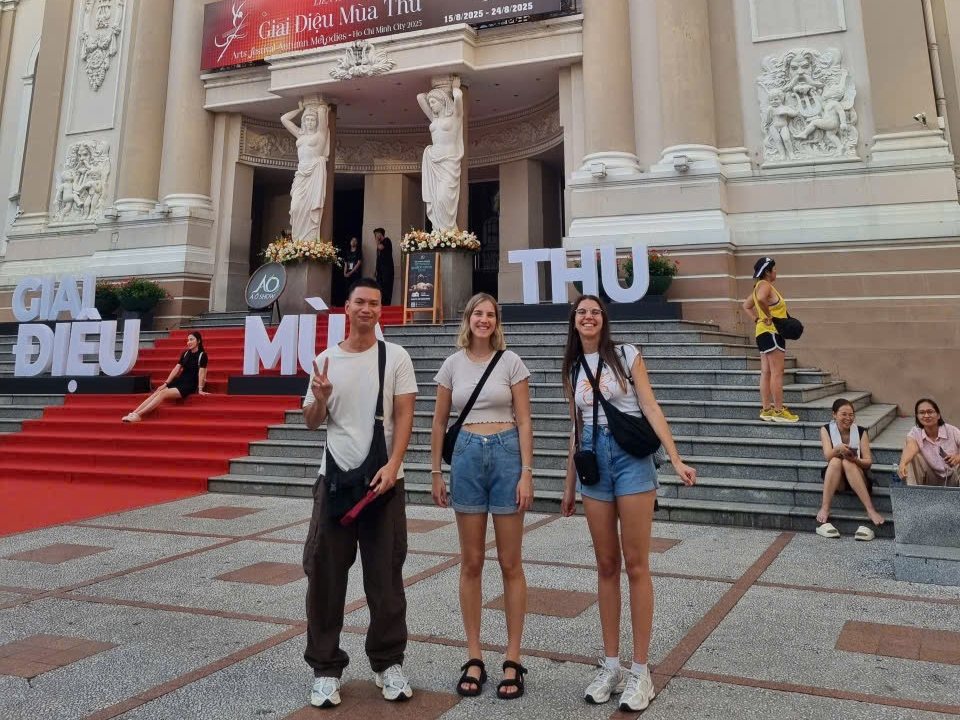
Saigon Opera House
Opened on 1 January 1900. From 1956 until 1975 it wasn't a theatre at all, because South Vietnam's National Assembly met here. It went back to being a theatre after the war.
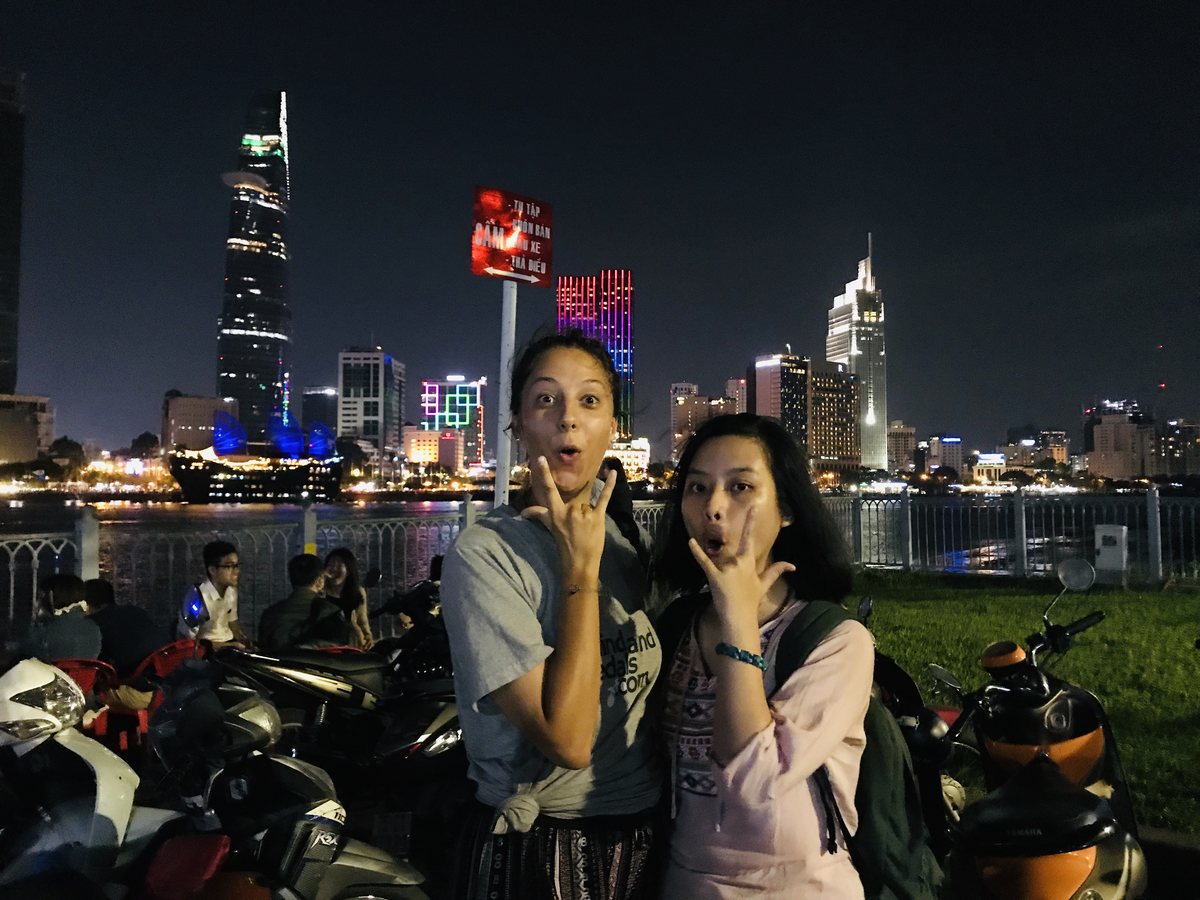
Bitexco Tower
It's 262 metres tall and opened in October 2010. The architect, Carlos Zapata, shaped it like a lotus bud, and the platform sticking out of the side is a helipad. For about a year it was the tallest building in Vietnam. We look up at it from below.
The old hotels
The Continental is the oldest, from 1880. Graham Greene lived there in the 1950s and wrote The Quiet American in Room 214.
The Rex started out as a garage and car dealership. During the war, its rooftop was where the US military gave its daily press briefings. Reporters called them the Five O'Clock Follies.
The Caravelle opened with a party on Christmas Eve 1959. CBS and NBC both had bureaus inside, and its bar was the highest point in the city, so journalists went up there to watch the fighting.
22 Ly Tu Trong
You've probably seen this rooftop. On 29 April 1975, the day before Saigon fell, the Dutch photographer Hubert van Es took the picture of people climbing a ladder to a helicopter on top of a building. Most people think it shows the US Embassy. But it doesn't…
It's this building, the old Pittman Apartments, at what was then 22 Gia Long Street. CIA staff lived here, Van Es shot it from his office balcony four blocks away, with the longest lens left in the office, a 300 mm. His caption had the right building. Someone at UPI changed it to the embassy, and the mistake stuck. The embassy was about half a mile away.
We can't go up there like we used to anymore. We stop in the street and I show you which roof.
The Central Post Office, Notre Dame Cathedral and the War Remnants Museum aren't on this tour. They're worth seeing yes. However none of them needs a guide, so I leave them out and you keep the money. Here's how to do them yourself:
The Post Office and the cathedral
They face each other across the same square in District 1, so do them together. The post office still works as a post office, and it's free to walk in. The cathedral has been under restoration since 2017. Its two gold crosses went back on top of the towers in March 2026, and the work is meant to finish around the end of 2027, so for now you see it from outside.
War Remnants Museum
28 Võ Văn Tần, District 3, a short Grab from the post office or you can just walk. It's 40,000 VND, open every day from 7:30am to 5:30pm. You should plan on two hours. It's very heavy but for me it's worth it.
My Saigon guide has a one-day plan that fits all three in, with times and prices.

About 2 km on foot, spread over the whole 4.5 hours. If a stop's too far to walk, we take a Grab, and that's on me. We finish wherever suits you.
Not included: lunch if we stop for one, you pay for your own, personal expenses, tips.
I send the meeting point after you book.
If you're staying in District 1, 3, 4, 5 or 10, I can pick you up at your hotel. The meeting point works just as well, though. Put the pin I send you into Grab and it drops you right there.
Easiest for both of us: pay cash after the tour. Any currency you're carrying works, dong, euros, dollars, whatever's in your pocket. Rather sort it before we meet? Use the card option above instead.
Around 2 km, with a Grab for the longer hops. If your knees or your feet need it, say so and I'll change things.
Wherever you're heading next. Tell me where that is and I'll leave you there.
Yes. Vegan, vegetarian, no pork, no seafood, nut allergies, it's all fine. Tell me when you book, not when we're already standing at the stall.
Saigon rain is heavy and quick. We get under a roof, have a drink and wait, and it's usually over in half an hour. If it really pours all day, you pick another date or get your money back.
Cancel up to 1 day before and you pay nothing, or get it all back if you've paid already. Later than that, I've usually bought things and said no to other people.
Message me on WhatsApp with your dates. I'll check availability and we'll sort the timing from there.
Book on WhatsApp →