

This is the part of Saigon I'd show my friend 😊 Most of it's in District 3 and District 10, and most visitors never see any of it.
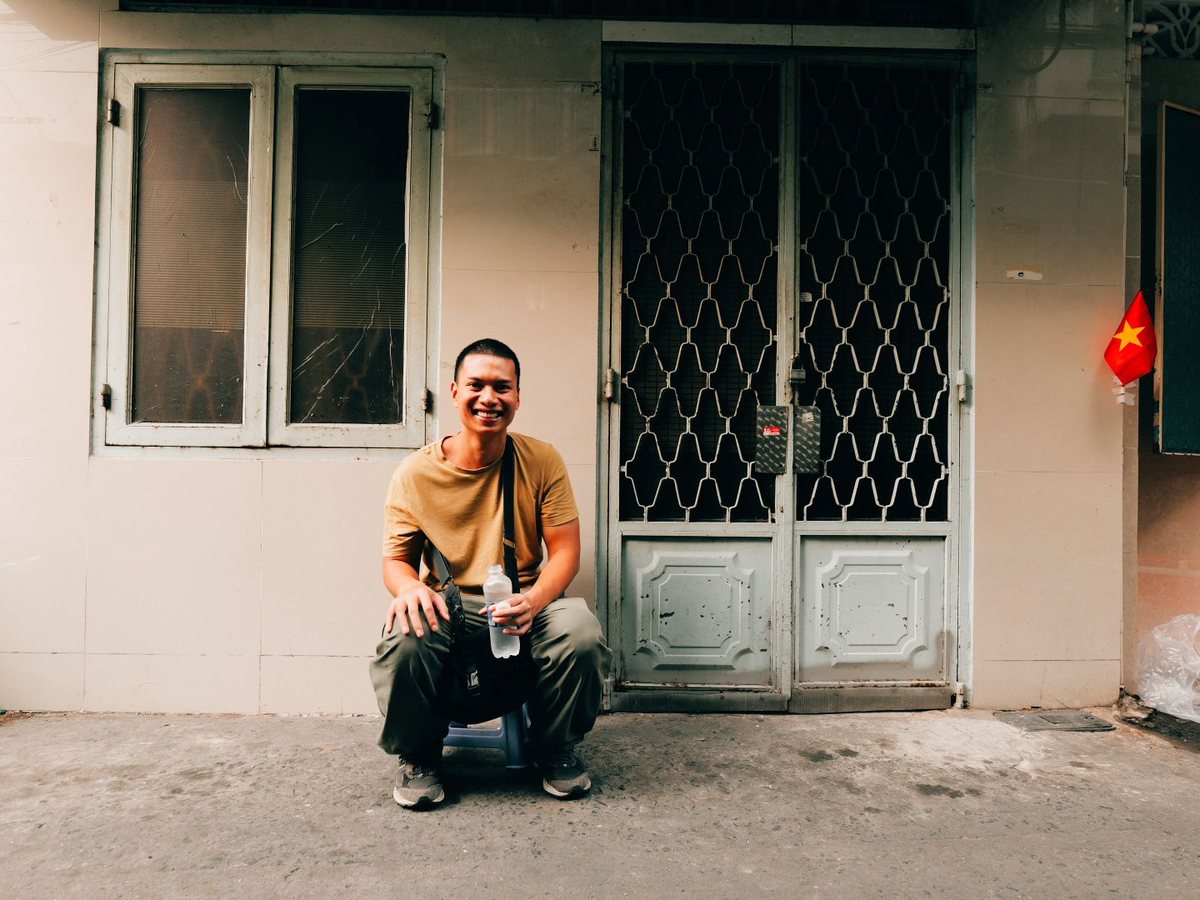
We go inside an apartment block built in 1968, and I mean properly inside. We sit in a cafe that's been making coffee the same way since 1938, and in another one with a weapons bunker under the floor. There's a market laid out like a chessboard and a temple with a tower 63 metres tall. We also stop at the corner where the monk Thich Quang Duc died in 1963. The route can shift a little, because places like the cafes are run by aunties and they close whenever they feel like it.
It takes 2.5 hours. We walk about 1.5 km, and we take a Grab if you get tired, which is included. The route isn't fixed. It changes with the day, the weather, what's open, how you're feeling.
Coffee and snacks are on me. The schedule's flexible too, so tell me what time suits you and I'll fit around your day. We finish wherever you want, we can just Grab.
For the same route with the District 1 landmarks added, there's Saigon See It All. It's 4.5 hours.
There's no set order, these are usually the places:
Nguyen Thien Thuat apartments. This is the whole point of the tour. The blocks went up in 1968, for families from Ban Co whose houses had burned down. In 1950 this whole area was thatched houses and dirt roads. A Tuoi Tre article says the people of Ban Co got to "go upstairs", and their whole way of life changed.
We don't look at it from the street. We go up the stairs and enjoy the view, and then we just poke around for a while.
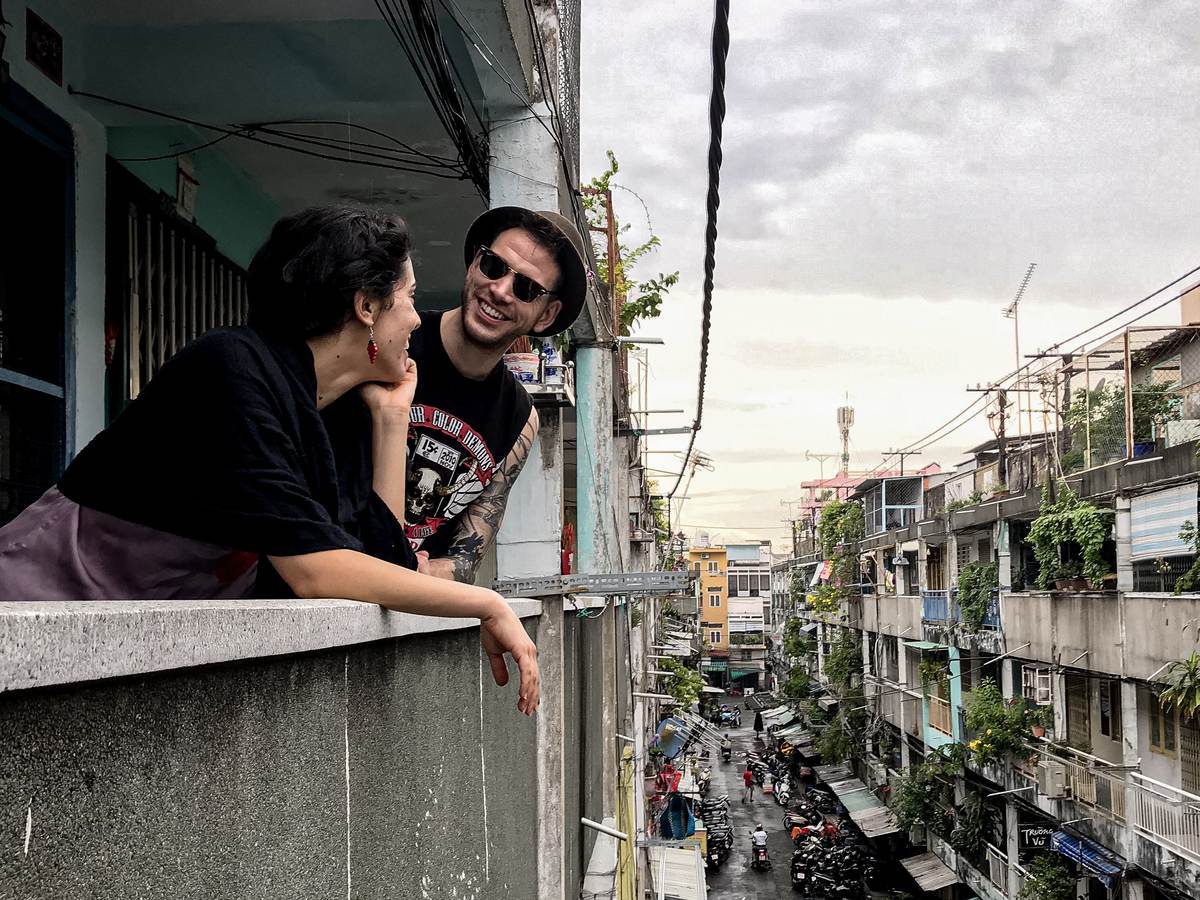
Walking through, what you mostly hear is aunties sitting around chatting. People have been cooking dinner in these kitchens for 58 years.
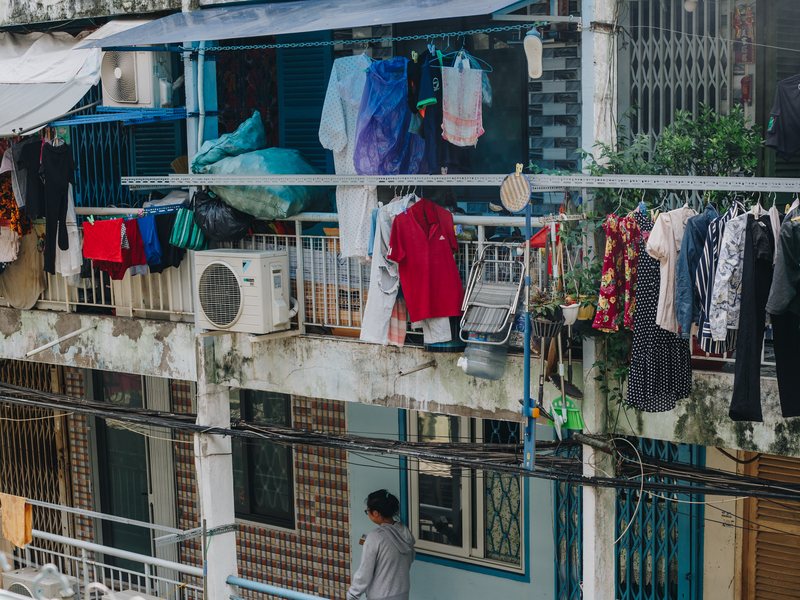
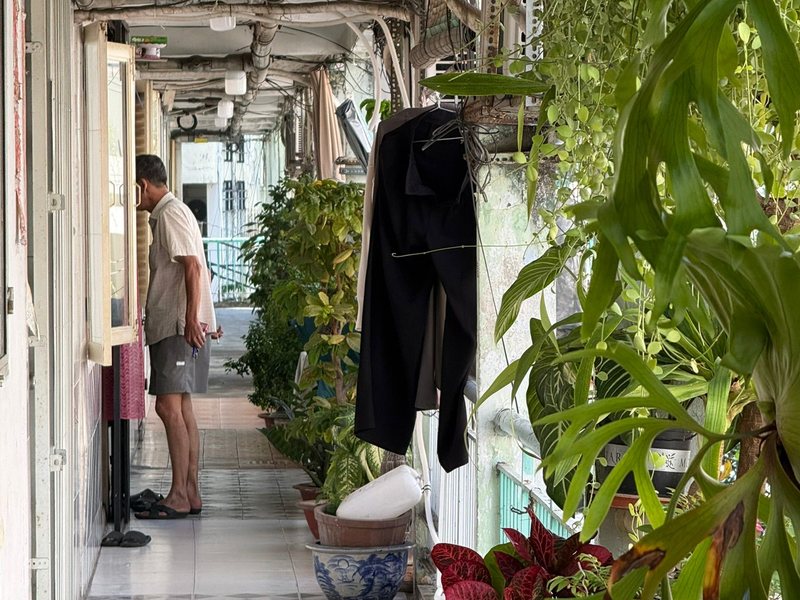
In 2021 the city called the blocks seriously deteriorated and proposed knocking them down, if half the residents agreed. They're still here. I don't know for how long. Downstairs there are a lot of food stalls, and the street out front is the one known for its music shops.
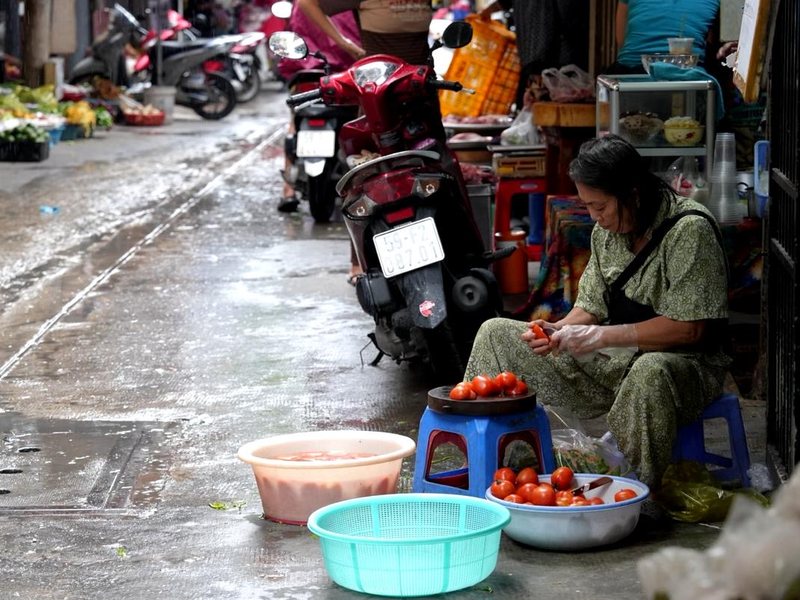
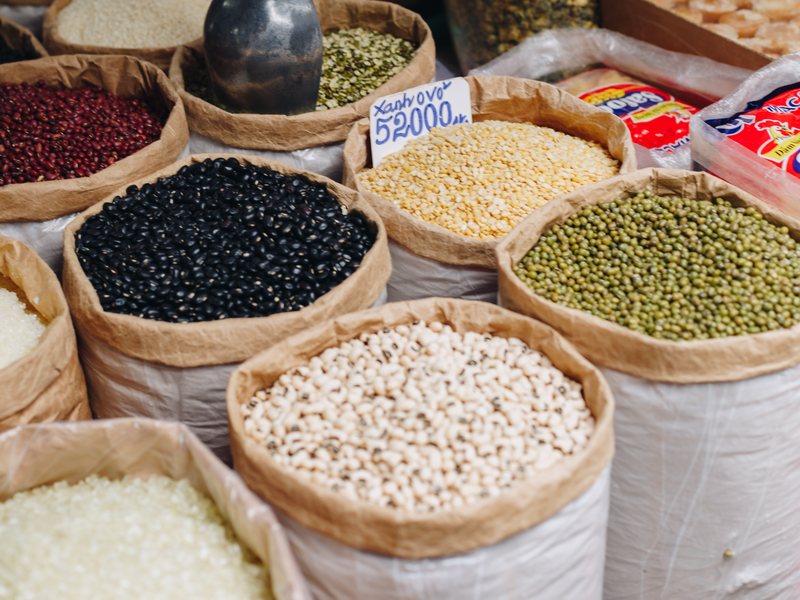
Ban Co market. Right next to the apartments. Ban co means chessboard, and the alleys here cross each other in a grid. It's an alley market. It started from alley 664 off what's now Nguyen Dinh Chieu and spread out on both sides, and I would say it looked like a giant fish skeleton. It's a wet market, so it's fresh food for people who live around here. Nobody's selling you a fridge magnet.
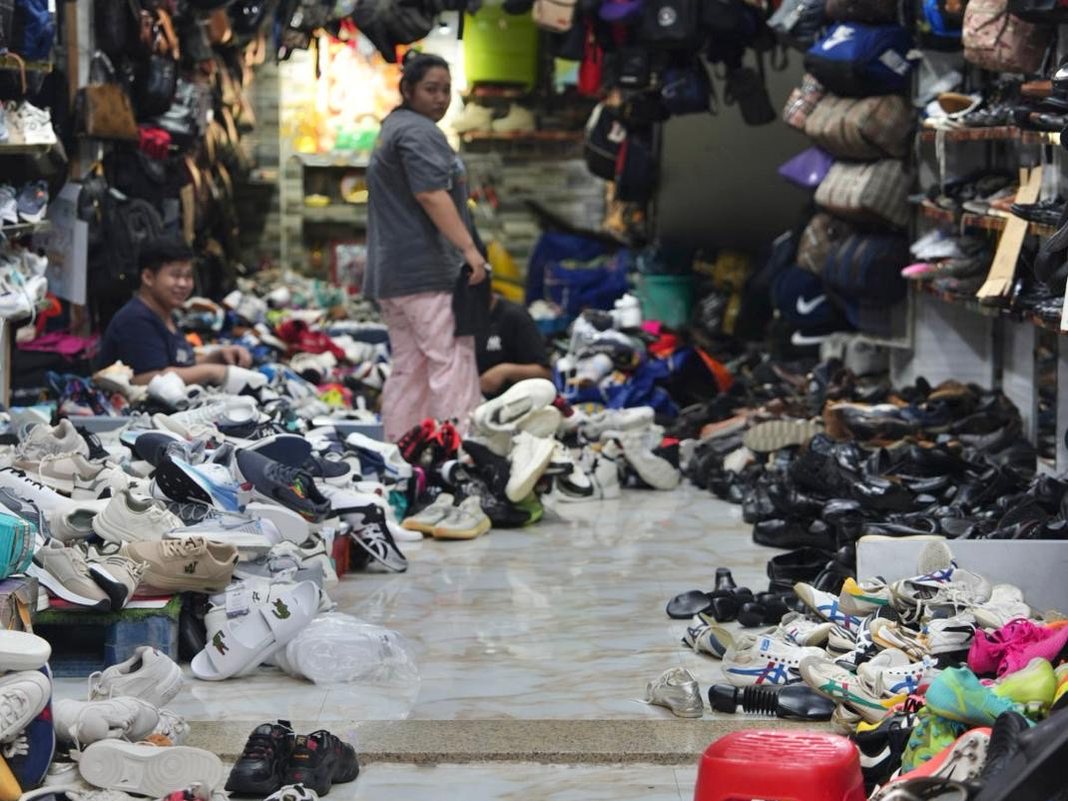
The shoe street market. A whole street of shoe stalls. Not much more to say about that one.
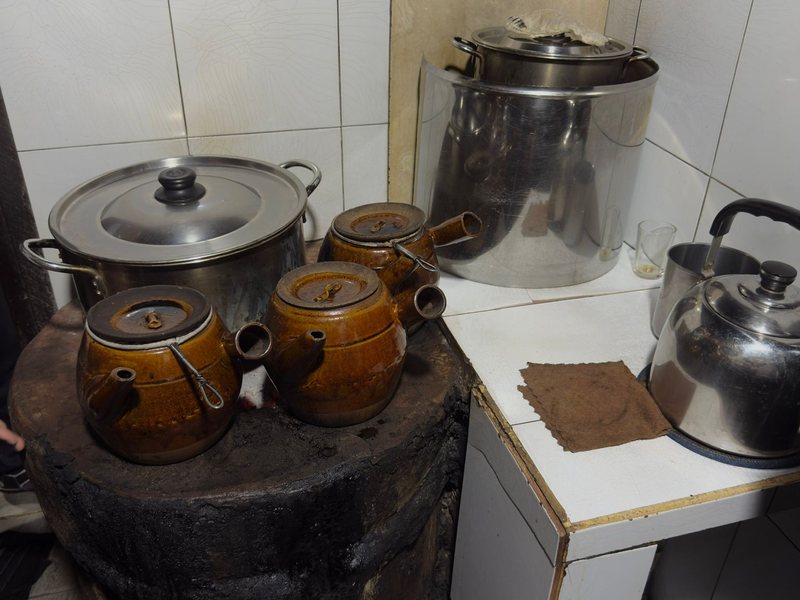
Cheo Leo cafe. Open since 1938, which makes it one of the oldest cafes in Saigon. The founder learned to make cà phê vợt from Saigon's Chinese coffee sellers. The vợt is the cloth filter. It's long, like a stocking. They brew over charcoal in clay pots, and the coffee goes through the cloth twice.
We sit down here for a while. It's down an alley off Nguyen Thien Thuat, and people have been coming in off that alley for coffee for 88 years.

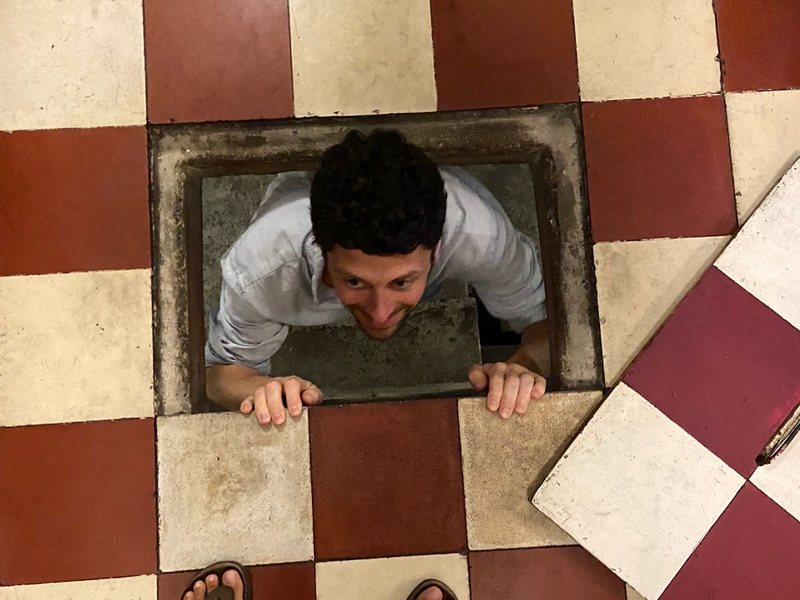
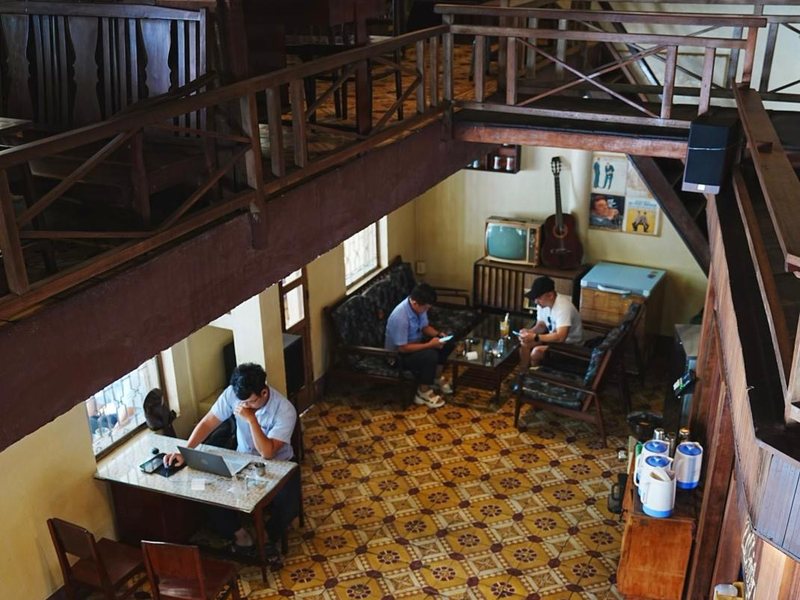
Do Phu cafe. A cafe that also does cơm tấm, broken rice. In the 1960s the man who lived here, a building contractor called Tran Van Lai, was secretly working with the Saigon commandos. He dug a bunker under his own house. It took him almost a year, and he told people he was fixing the bathroom drain.
It's over 10 metres long. By 1968 it was holding nearly two tonnes of Viet Cong weapons, and in the Tet Offensive they came out for the attack on what's now the Independence Palace. Later his family turned the house into a cafe. Since 2018 the bunker's been open to visitors. It's under the floor tiles, the red and white ones.
Thich Quang Duc monument. This one's heavy. On 11 June 1963 the monk Thich Quang Duc set himself on fire at this intersection, in protest against the Ngo Dinh Diem government's treatment of Buddhists. The streets had different names then.
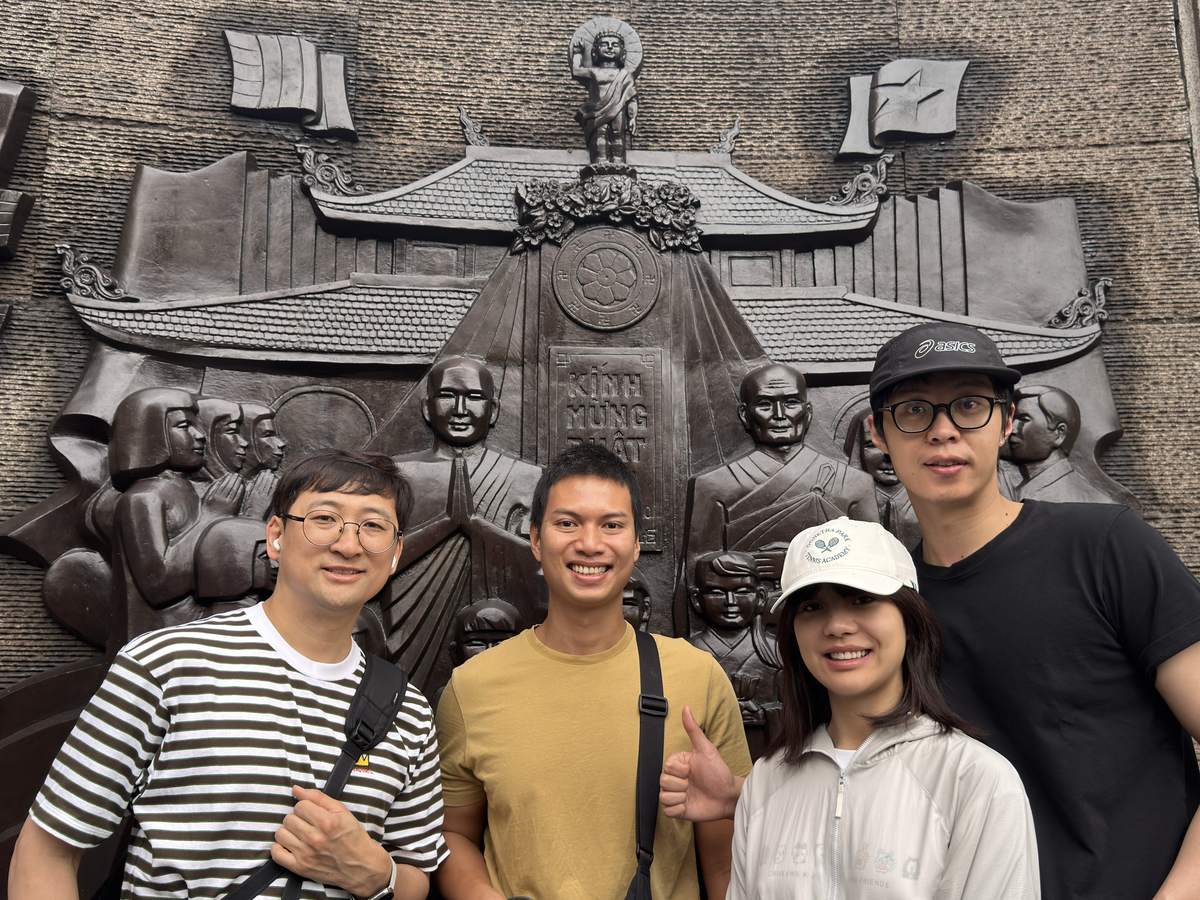
Viet Nam Quoc Tu temple. The name means Vietnam's national pagoda. It's on 3 Thang 2 street in District 10. The foundation stone went down in April 1964, and the whole place was rebuilt, with the new temple opening in November 2017.
The tower's 63 metres tall, with 13 floors, one for each of the 13 Buddhist groups that took part in the nonviolent protests of 1963. In the main hall there's a bronze Buddha 7.5 metres tall. It weighs 35 tonnes. You don't need to be Buddhist and you don't need to do anything here. People come to pray, and we're just there with them for a bit.
People usually say two things after this one. That it felt like spending a few hours with a friend, and that I knew a lot. I like hearing the first one more.

About 1.5 km of walking in total. When the next stop is far, we take a Grab, that's included. The tour ends wherever you want.
Not included: personal expenses, tips.
I send the meeting point after you book.
Private tour? I can pick you up at your hotel in downtown Saigon. Honestly though, the meeting point is easier. Drop the pin I send you into Grab and it takes you right there, cheap and quick.
Easiest for both of us: pay cash after the tour. Any currency you're carrying works, dong, euros, dollars, whatever's in your pocket. Rather sort it before we meet? Use the card option above instead.
About 1.5 km, spread over two and a half hours, so it's slow. Anything far, we do by Grab. If walking's hard for you, tell me and I'll adjust.
Wherever you want. Tell me where you're going after and we'll finish there.
Yes. Vegan, vegetarian, no pork, no seafood, nut allergies, all fine. Just tell me when you book. Don't wait till we're standing at the stall.
Saigon rain comes down hard and doesn't last. We sit down somewhere with a snack and wait it out, usually it's gone within half an hour. If it's really raining all day, I'll move you to another date or refund you.
Free cancellation up to 1 day before, and if you've already paid you get the full amount back. Any later than that and I've usually bought things already and turned other people away.
Message me on WhatsApp with your dates. I'll check availability and we'll sort the timing from there.
Book on WhatsApp →