

Can You Eat Vegan in Vietnam? What's Actually Plant-Based and What Isn't
Last checked: September 2026. Recipes change stall to stall, so always ask.Yes, you can eat vegan in Vietnam, and it's easier than most people expect. The traps just aren't the ones you'd guess. Meat you can see is easy to avoid. The fish sauce, the broth and the oil are what get you.
I run the Vegan Walk in Saigon, so I have some version of this conversation every week. People arrive worried they'll live on plain rice for two weeks. Then they find out this country has its own vegetarian food culture, much older than any vegan café. And the worry flips. Now it's "wait, there's fish sauce in that too?"
Often, yes. Most of what I tell my guests comes down to asking, every single time, about the things you can't see.
Why is Vietnam easier for vegans than people expect?
Because of chay. Chay is Buddhist vegetarian food, and it's everywhere here, cooked for generations in pagoda kitchens and family kitchens both.
A lot of Vietnamese people eat chay on the first and fifteenth of the lunar month. Others keep it for a whole month, or for life. So chay restaurants are full of locals. Grandmothers. Office workers in lanyards. Monks. Normal lunch.
Everyday food helps too. Rice, tofu fried a hundred different ways, piles of fresh herbs on every table, fruit, coconut milk in a lot of the desserts. Plenty of Vietnamese cooking starts out plant-based and only stops being vegan at the last step, when the sauce goes on.
Chay kitchens also take mock meat seriously, turning tofu, mushrooms, wheat gluten and jackfruit into things that look like pork or shrimp. Some guests love it. Others find it strange to eat a vegan shrimp that looks exactly like a shrimp, which is fair too.
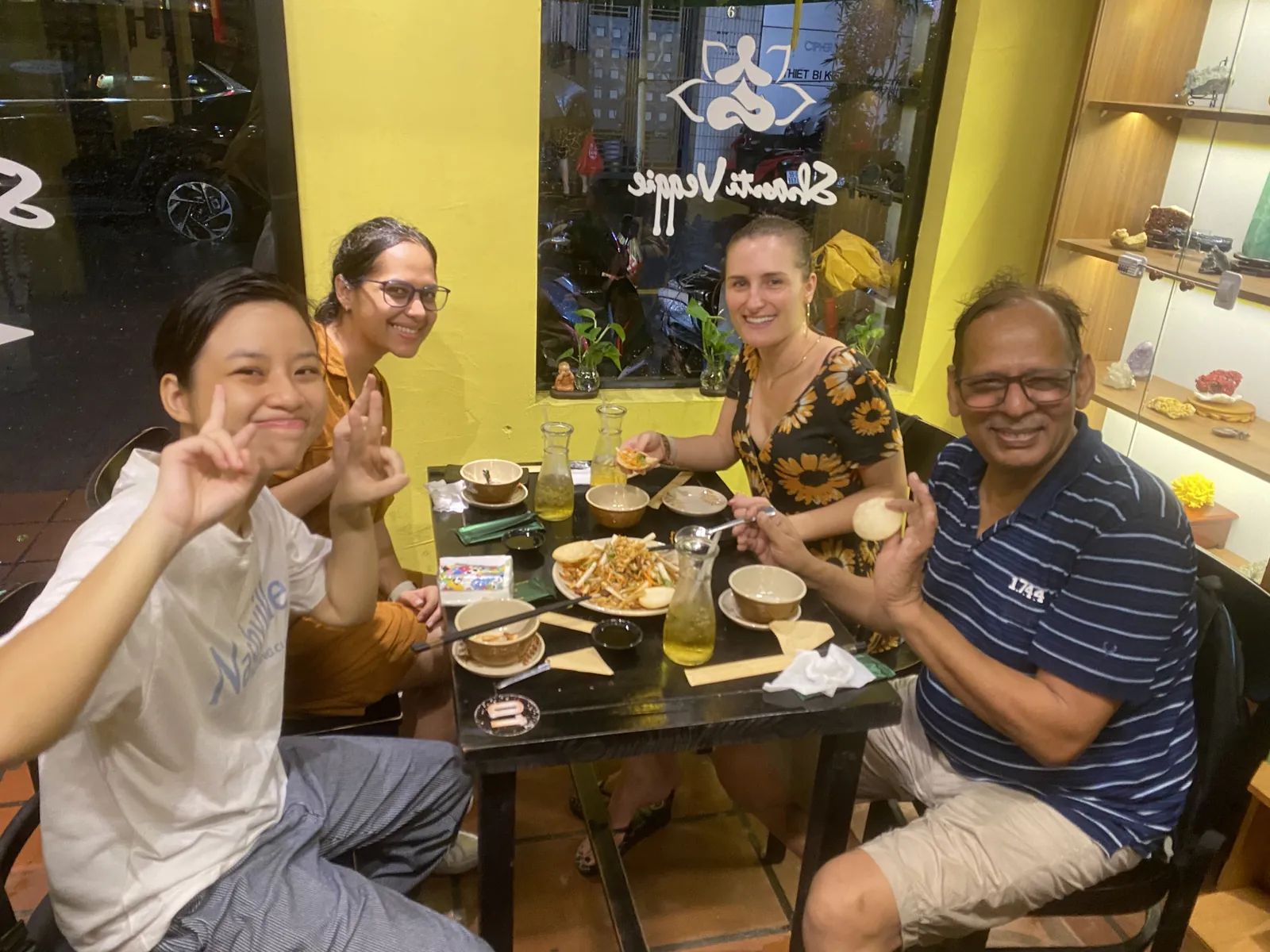
What is in Vietnamese fish sauce?
Anchovies and salt, in the traditional recipe. Makers layer the fish with salt in big barrels and leave it to ferment for months, sometimes over a year, and the liquid that drains out is the sauce. It's called nước mắm, and the whole cuisine leans on it.
This is the one that catches vegans, and nobody's hiding it on purpose. To most cooks here, fish sauce is simply what salty tastes like, so it doesn't occur to them to mention it.
It goes in the dipping sauce that comes with almost everything, and in marinades, stir-fries, salad dressing and broth. Sometimes it's in a plate that looks like nothing but vegetables and soy sauce.
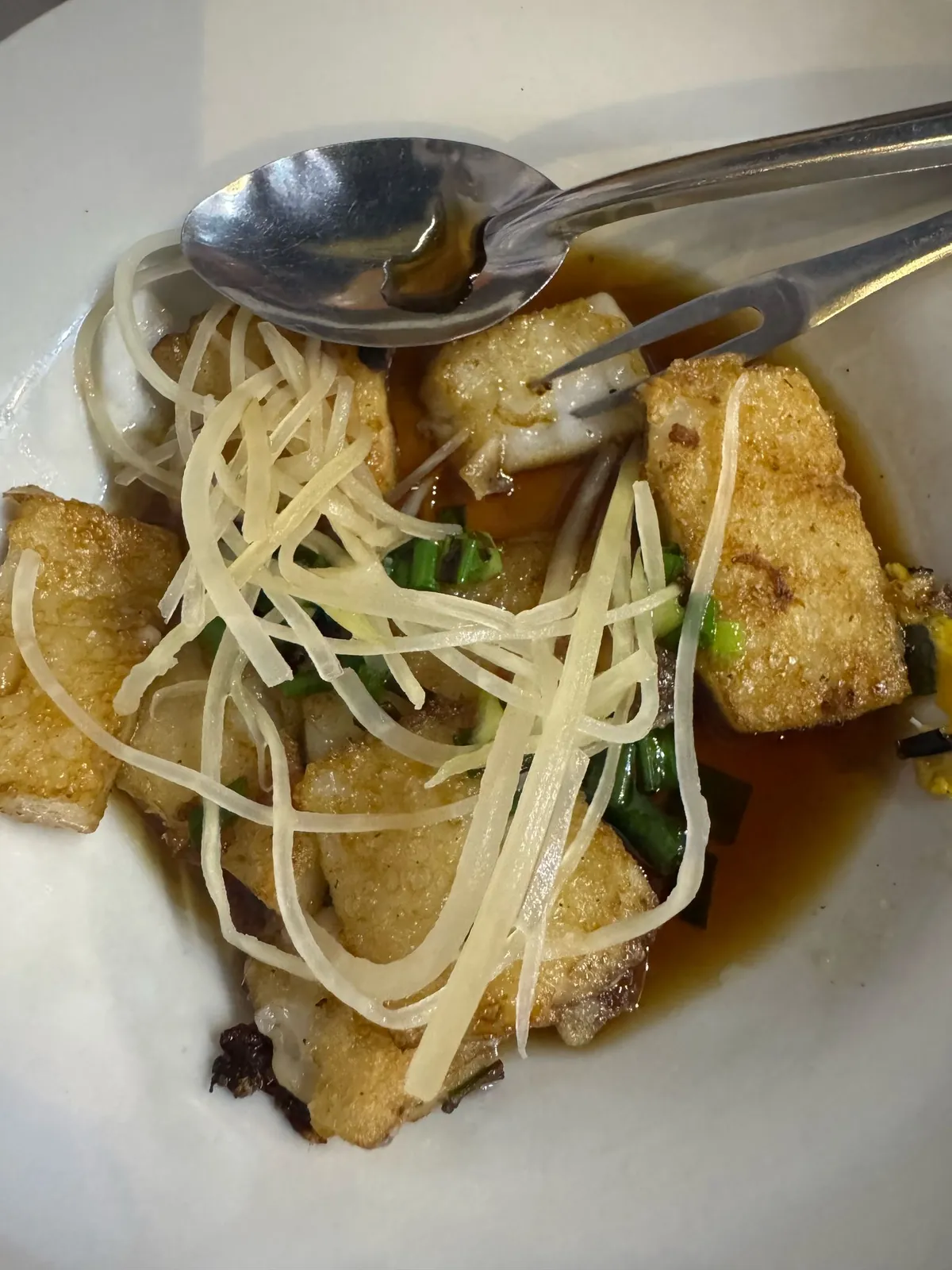
So ask about fish sauce by name. "Is it vegetarian?" won't cover it, because plenty of people honestly file fish sauce under seasoning, next to the salt.
Chay places make a plant-based dipping sauce instead, built to taste close to the real one, so in a chay kitchen that's usually covered. Walk up to a regular stall and assume fish sauce until someone tells you otherwise.
What else is hiding in food that looks plant-based?
Fish sauce is the big one. I watch for three others.
Shrimp paste (mắm tôm)
Fermented shrimp, ground into a thick purple-grey paste with a smell you'll know the moment you meet it. Cooks stir it into some noodle soups and sauces, and serve it on the side as a dip.
Its smaller cousins are easier to miss. Dried shrimp gets scattered on top of things, and the chili salt that comes with sour fruit on the street often has shrimp ground into it, even though it looks like plain salt and chili.
Broth
This one is the sneakiest. A clear soup with only greens floating in it is very often pork bone stock underneath, or dried shrimp, and unless you know to look for it you can't really taste it. Outside a chay kitchen, Vietnamese soups start with bones far more often than with vegetables.
Lard and pork fat
Some vendors still fry in lard. The scallion oil spooned over rice, noodles and grilled things was traditionally made with pork fat, and while plenty of places use vegetable oil now, some still make it the old way. Little crispy cubes of pork fat end up on top of dishes too. You won't spot any of this by looking, so ask.
Is pho vegan?
Usually not. Regular pho is a beef or chicken broth simmered with bones for hours, and that broth is the whole dish. Ask for no meat at a regular pho shop and you get noodles in beef broth, which is just pho with the meat taken out.
The vegan version exists at chay restaurants, with a broth built from vegetables and mushrooms and the same star anise, cinnamon and charred ginger. It's good. A different bowl, and that's okay.
So skip the regular pho shop and order it at a chay place.
Is Vietnamese vegetarian food actually vegan?
Chay is usually vegan. Not always.
Traditional Buddhist chay means no meat, no fish, no seafood and no egg. Dairy was barely part of Vietnamese cooking to begin with, and stricter chay kitchens even skip garlic and onion, so in one way chay can be stricter than vegan.
But a lot of people use chay to mean "no meat" and stop there. That's where it slips.
- Egg. Some chay places, usually the newer or more casual ones, will serve egg and still call it chay, and plenty of people who eat chay are fine with eggs. Ask.
- Condensed milk. Iced coffee comes with it by default. Some desserts and drinks use it too.
- Butter, milk, cheese. Chay bakeries and modern chay cafés sometimes use them, especially in cakes and anything Western-style.
- Honey. Chay doesn't exclude it. If you avoid honey, ask about drinks and sweets.
- Mock meat. A lot of it is just soy and wheat gluten, but some packaged mock meat uses egg white to hold it together. If that matters to you, ask what's in it.
So chay gets you most of the way there, and asking covers the rest.
Which Vietnamese dishes are usually vegan?
These dishes are usually plant-based, or easy to get that way, especially at a chay place. Recipes change from stall to stall, so ask anyway.
- Cơm chay (rice plate at a chay restaurant). Rice with a few plant-based dishes on top. The safest thing you can order.
- Phở chay (vegan pho). Broth from mushrooms and vegetables. Still ask: only order this at a chay place, a regular stall won't have a separate broth.
- Bún riêu chay (vegan tomato noodle soup). Tomato, tofu, fried tofu puffs. Still ask: whether there's mắm tôm on the side.
- Gỏi cuốn chay (vegan fresh spring rolls). Rice paper, herbs, tofu, vermicelli. Still ask: the dipping sauce.
- Bánh mì chay (vegan banh mi). Baguette with tofu or mock meat. Still ask: butter and pâté.
- Rau muống xào tỏi (morning glory with garlic). Still ask: oyster sauce or fish sauce in the wok.
- Đậu hũ chiên sả ớt (fried tofu with lemongrass and chilli). Still ask: fish sauce in the seasoning.
- Xôi (sticky rice). Still ask: what goes on top.
Which dishes look plant-based but usually aren't?
These are the ones that catch people. They look like vegetables, tofu or noodles, and there's usually fish sauce, shrimp or pork broth in there somewhere.
- Gỏi cuốn (fresh spring rolls). Looks like: herbs and rice paper. Usually has: pork and shrimp inside, fish sauce or fermented soybean in the dip.
- Bánh xèo (crispy pancake). Looks like: a vegetable pancake. Usually has: pork and shrimp in the filling, nước mắm to dip.
- Bún riêu (tomato noodle soup). Looks like: tomato and tofu. Usually has: crab or shrimp paste, pork bone broth.
- Bánh cuốn (steamed rice rolls). Looks like: plain rice sheets. Usually has: minced pork inside, nước mắm to dip.
- Rau muống xào (stir-fried morning glory). Looks like: just greens and garlic. Usually has: fish sauce or oyster sauce.
- Đậu hũ sốt cà (tofu in tomato sauce). Looks like: tofu and tomato. Usually has: fish sauce in the sauce, sometimes minced pork.
- Canh chua (sour soup). Looks like: a vegetable soup. Usually has: fish, and fish sauce.
- Phở at a regular stall. Looks like: you can just order it without the meat. Usually has: beef or chicken bone broth, which doesn't come out.
How do I say I'm vegan in Vietnamese?
Say you eat chay first. It's the word everyone knows. Then ask about the specific things one by one, because not every cook hears chay the same way.
| What you want to say | Say it like this | What you'll usually hear back |
|---|---|---|
| I'm vegan. I eat chay. | Tôi ăn chay | "Chay hả?" or "Có chay" / "Không có chay" |
| No fish sauce, please. | Không nước mắm | "Dạ, không nước mắm" |
| No shrimp paste, no dried shrimp. | Không mắm tôm, không tôm khô | |
| Is the broth made with meat or bones? | Nước dùng có xương không? | "Có" (yes) or "Không" (no) |
| No egg, no milk. | Không trứng, không sữa | |
| Is there pork fat in this? What oil do you use? | Có mỡ heo không? Dùng dầu gì? | "Dầu ăn" |
| Thank you. | Cảm ơn |
Tôi ăn chay. Không thịt, không cá, không nước mắm, không mắm tôm, không trứng, không sữa. Cảm ơn!
If you get a blank look, don't push it. Point at the dish, say chay, smile. Most vendors will tell you straight, or point you somewhere else.
So how do you actually eat vegan here?
Look for chay on the sign. Eat where the monks and the aunties eat on the fifteenth of the month. At a regular stall, ask about fish sauce by name, ask about the broth, and accept that sometimes the answer is no. Then go next door. In Saigon there's always a next door.
That's the whole idea of the Vegan Walk. I do the asking and you do the eating, for three slow hours with a small group.
Vegans come on the Early Riser Walk too, if you're up early. It's a regular morning walk, so tell me before and I'll plan around you.
Ask first, then eat slow. that's most of it.
Why book with Spring Saigon Tours
I run small food walks and evening tours through Ho Chi Minh City, the city I grew up in. Spring Saigon Tours has 2,700+ five-star reviews across Airbnb, Withlocals, GetYourGuide, and Viator.
Tours stay small on purpose. Max 6 guests on a group walk, private options for anyone who wants the city to themselves. No scripts, no laminated menus.
The people who come aren't really customers. They're just the friends I haven't met yet.
Questions people ask
Can you eat vegan in Vietnam?
Yes, you can eat vegan in Vietnam, and it's easier than most people expect. Meat you can see is easy to avoid. The fish sauce, the broth and the oil are what get you.
What is in Vietnamese fish sauce?
Anchovies and salt, in the traditional recipe. Makers layer the fish with salt in big barrels and leave it to ferment for months, sometimes over a year, and the liquid that drains out is the sauce. It goes in the dipping sauce that comes with almost everything, and in marinades, stir-fries, salad dressing and broth.
Is pho vegan?
Usually not. Regular pho is a beef or chicken broth simmered with bones for hours, and that broth is the whole dish. The vegan version exists at chay restaurants, with a broth built from vegetables and mushrooms.
Is Vietnamese vegetarian food actually vegan?
Chay, Buddhist vegetarian food, is usually vegan. Not always. A lot of people use chay to mean "no meat" and stop there, so ask about egg, condensed milk, butter and honey.
How do I say I'm vegan in Vietnamese?
Say "Tôi ăn chay" (I eat chay) first. It's the word everyone knows. Then ask about the specific things one by one, like "Không nước mắm" (no fish sauce) and "Không trứng, không sữa" (no egg, no milk).
If a menu says "vegetarian" in English, is it vegan?
Not on its own. At a place set up for tourists, "vegetarian" usually means no meat you can see. It can still come with fish sauce, egg or bone broth, so ask about each one by name, every time.
Can I eat vegan at a regular street stall, not a chay place?
Sometimes, but it's harder. Sauces and broths are shared, and the same wok and the same oil cook everything. If you're strict about shared equipment, stick to chay kitchens. If you're not, ask about fish sauce and broth and you'll still find things.
When is the easiest time to find vegan food in Vietnam?
Any day works. Chay restaurants are open all year. On the first and fifteenth of the lunar month they're at their busiest, and some regular stalls put out chay dishes too. Check the lunar calendar when you land.
Vegan and coming to Saigon? Message me on WhatsApp with your dates and I'll tell you where to start.
Book a tour with Spring →