
Getting Around Ho Chi Minh City: What Actually Works
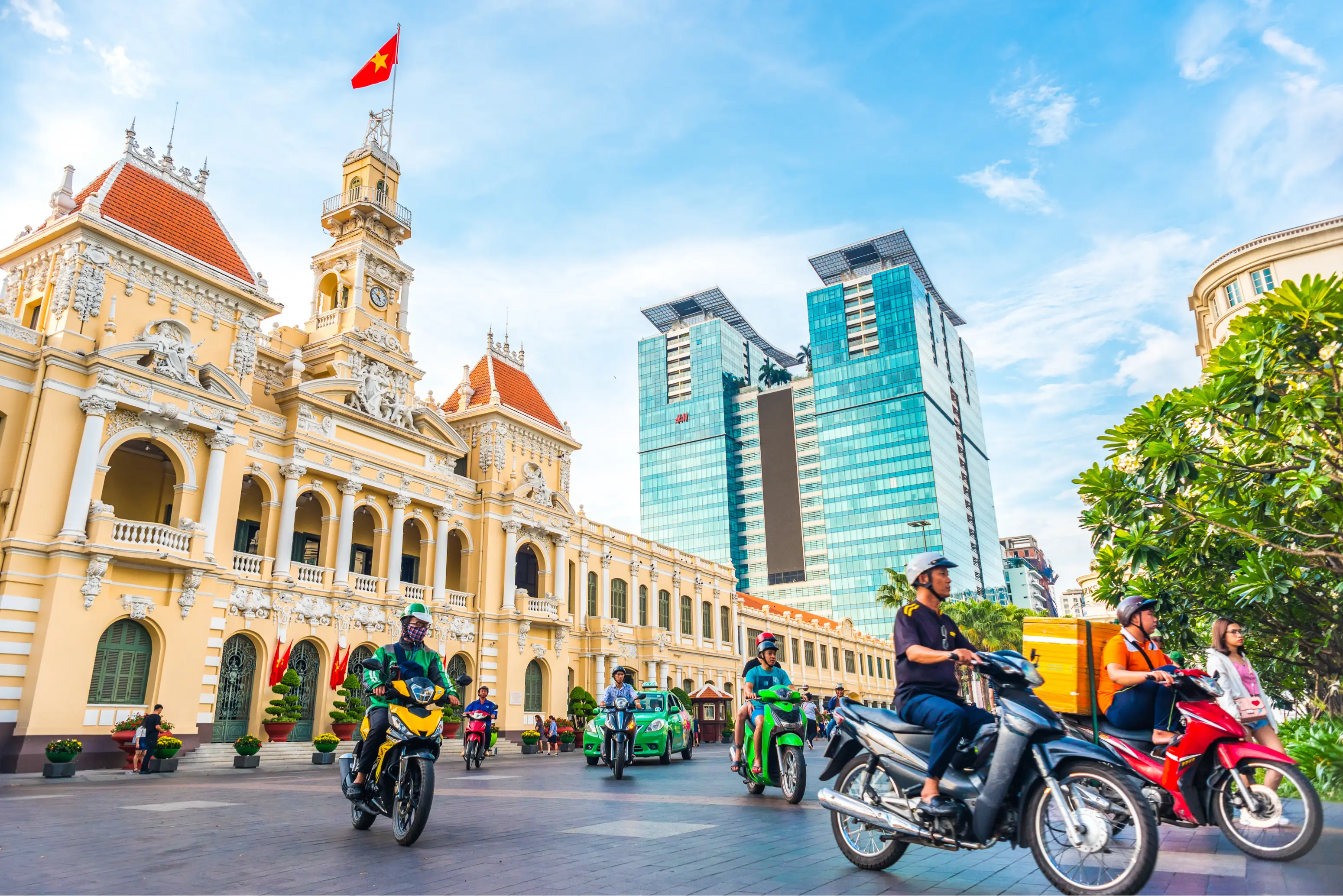
The first time you see the traffic in Saigon, you think: I am not crossing that.
A solid wall of motorbikes. No gaps. No obvious signal for when it is your turn. The light changes and nothing stops. You stand on the kerb for a while and watch locals walk straight in and come out the other side, unbothered. Eventually you just do it too.
That is a reasonable summary of getting around this city. It looks impossible. Then you do it. Then it is fine.
How to cross the street
Walk slowly. Steady pace. Don't stop, don't run, don't make sudden movements. The motorbikes will go around you. They have been doing this their whole lives and they are very good at it. What makes it dangerous is hesitation, not the traffic itself.
Make eye contact with drivers if you can. Step out when there is a small gap and keep moving. After the first time, you stop thinking about it.
Traffic lights exist and are mostly observed. Pedestrian crossings exist and are mostly ignored. In practice, both mean the same thing here: look, wait for a workable gap, go.
Grab is the only app you need
Download Grab before you land. It covers rides, food delivery, and payments across Southeast Asia. In Saigon, it works extremely well.
Open the app, type your destination, choose GrabCar or GrabBike (motorbike), and confirm. The price is fixed before you start. No negotiation, no meter running, no wondering if you are being overcharged. Pay by card in the app or cash to the driver.
GrabBike (motorbike) is faster and cheaper for most short trips. A helmet is provided. GrabCar is more comfortable for longer rides or when it is raining hard. Both are reliable.
Traditional taxis still exist. Vinasun and Mai Linh are the honest ones. If you take a taxi that is not one of those two, agree on the price before you get in or make sure the meter is running.
How walkable is Saigon
More than it looks. District 1 is very walkable if the heat doesn't get to you. The main streets around Bến Thành, Lê Lợi, and Nguyễn Huệ are wide and shaded in places. District 3 is also good on foot. Bình Thạnh, parts of District 4, and the streets around the Ben Thanh area connect well enough to walk between.
The heat is the real obstacle, not the distance or the traffic. In May and June, midday is hard. Thirty-five degrees and humid. Morning and evening are fine. Walk before nine or after four.
Bring water. Wear something light. Stop for iced coffee when you need to. There is one on almost every block.
The address system
Vietnamese addresses have a logic but it takes a few days to read naturally.
The hẻm is what trips people. A narrow alley off a main street, and much of Saigon's real life happens inside them. An address like "15/7 Nguyễn Trãi" means house number 7 inside alley 15, on Nguyễn Trãi Street. The main street is the last part, not the first.
Google Maps handles hẻm addresses well now. Drop the pin, zoom in, and you will see the alley clearly. Some alleys go deep and branch. Follow the numbers. They run consecutively even if the alley bends. If the numbers skip, you missed a branch.
Apple Maps is less reliable in Saigon. Use Google Maps or Grab's built-in navigation. Download the offline map for District 1 and 3 before you go out, in case of bad signal.
The things that will still catch you
One-way streets. Saigon has a lot of them, and several change direction depending on the hour. If you are walking you won't notice. If you are navigating by Grab it doesn't matter. If you are renting a bicycle or motorbike, pay attention to the signs.
Roundabouts. Traffic enters from every direction and slows for nothing. Stay to the outside, keep your speed steady, and exit when you reach your street.
The gap between the name on the map and the name on the sign. Streets were renamed after 1975 and older residents still use the old names. The address on a restaurant's website might say one thing and the sign outside says another. If in doubt, call ahead or drop the GPS pin and just go to the location.
What you actually need a person for
Not transport. You can get around Saigon on your own. Grab works, Google Maps works, the street crossing is learnable. Nobody needs a guide to get from their hotel to a restaurant.
What is harder to find alone is the thing behind the thing. The name of the dish you just ate and where to order it again. The story of the building you keep walking past. The stall that looks identical to four others on the same street but is the one the locals go to. The shortcut through the hẻm that saves ten minutes and goes past something worth seeing.
I don't take people on tours because they can't figure out the bus. I take them because knowing where you are is not the same as knowing what you're in.
For scams to dodge, apps worth having, and a few Vietnamese words that help, see the full Vietnam travel tips.
If you want to stop thinking about where you're going and just be somewhere, that's what the early morning walk is for. Small group. I know where we're going. You just follow.
Book a tour with Spring →Why book with Spring Saigon Tours
Spring Saigon Tours runs small food walks and city tours in Ho Chi Minh City. Spring is a Saigon native who has been eating her way through this city her entire life. Spring Saigon Tours has 2,700+ reviews across Google, TripAdvisor, Airbnb, GetYourGuide and Viator.
Tours are small on purpose. Max 6 guests for group walks. Private options for couples and small groups who want the city to themselves. No scripts, no laminated menus, no softened version of anything.
The people who come aren't really customers. They're just the friends Spring hasn't met yet.
Questions people ask
Is it safe to cross the street in Ho Chi Minh City?
Yes. The traffic is heavy but the drivers are experienced and expecting pedestrians to cross. Walk at a slow, steady pace without stopping or running. The motorbikes will go around you. Hesitation is the only real danger. After the first crossing it feels normal.
Is Grab safe and reliable in Saigon?
Very reliable. It is the standard way locals and visitors get around. The price is fixed before you confirm the ride, the driver's name and plate number show in the app, and you can track the route in real time. Both GrabCar and GrabBike work well throughout the city.
Should I rent a motorbike in Ho Chi Minh City?
Only if you have real experience riding in dense urban traffic. Saigon traffic is manageable once you know the rhythms, but the learning curve on a rented bike in a city you don't know is steep. For most visitors, Grab is faster, cheaper, and much less stressful. Bicycle rental works well for District 1 and 3 in the early morning.
What is the best map app for getting around Saigon?
Google Maps. It handles Vietnamese addresses, hẻm alleys, and offline maps well. Download the offline map for your area before going out in case of poor signal. Grab's built-in navigation also works and is useful when you're already in the app booking a ride.