
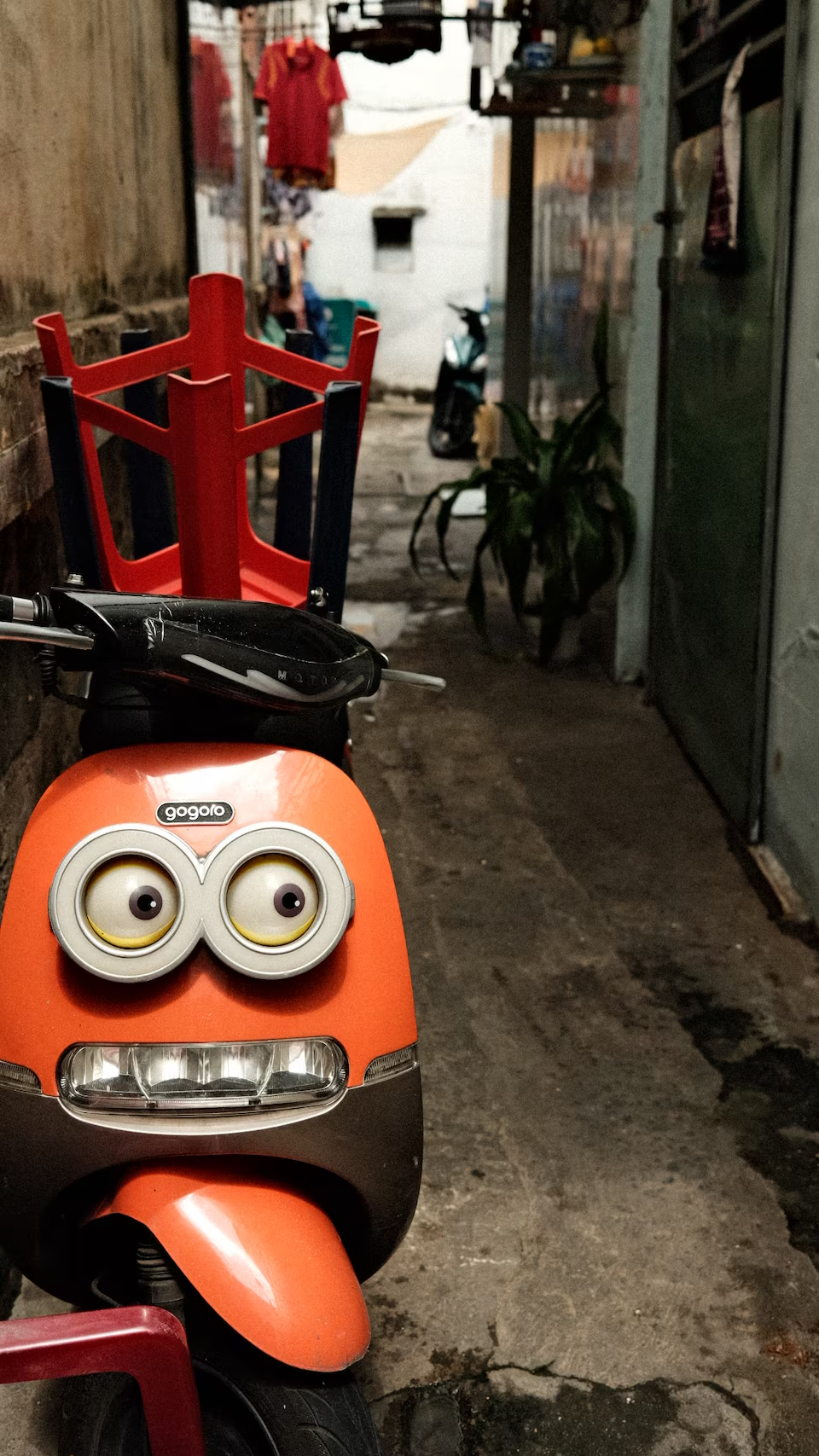
District 3 Saigon: A Morning Walk
District 3 starts where District 1 runs out. One street over from the tourist bars and the motorbike taxis idling outside the backpacker hotels, and the city becomes something else. The streets are wider. The trees are older. The noise drops by about ten percent and the whole thing slows down.
I've been walking through District 3 since I was small. My grandmother lived near Trần Cao Vân. We used to walk to the market on Saturday mornings, buy bánh cuốn from the same woman, take it home in a plastic bag and eat it at the kitchen table. I still walk the same streets now, most of them. The new cafés, the buildings that went up in the nineties. None of it bothers me because enough stayed the same.
This is what District 3 looks like at six thirty in the morning.
6:30am
The First Coffee
There's a woman who sells cà phê sữa đá from a cart near the intersection of Võ Văn Tần and Nam Kỳ Khởi Nghĩa. The cart is a converted pushbike with a small cool box on the back and a gas burner for the filter. Coffee takes about four minutes to drip through. You stand on the pavement and wait. When it's done she pours it over ice in a plastic bag, ties a rubber band around the top, pokes a straw through.
This is how most people in this city drink coffee before work. Standing up. On the pavement. Under ten minutes. It's different from sitting in a café and ordering something with a name. better in the morning, I think. The quick version, the working person's version. Coffee as fuel rather than occasion.
While you wait, the street is doing what streets in District 3 do in the early morning: the motorbike delivery riders going past, the school gates opening, the uncle across the road hosing down the pavement in front of his shop. Small things. quiet, and useful.
7:00am
Tao Đàn Park
Tao Đàn opens early. The gate on Trương Định is already unlocked before six, and by the time most visitors are thinking about breakfast, the regulars have been here for an hour. Old men with badminton rackets. A group of women doing line dancing to a Bluetooth speaker someone dragged in. A circle of men playing chess at a concrete table with a paper chessboard. An uncle with a transistor radio tuned to something I've never been able to identify with any certainty.
The park is not for tourists. There are no signs explaining it, no suggested routes, no café selling overpriced drinks at the entrance. It's a public park in a dense city and the people in it are the people who live within ten minutes of it. They come every morning. They have their spots. They nod at each other and sometimes they don't. The whole thing runs on routine. The best kind of social infrastructure. The kind that doesn't need anyone to organise it.
Tao Đàn also has birds. Real ones, in cages, which the older men bring out and hang from the trees while they sit below and drink tea. It sounds strange if you haven't seen it. Once you have, it's just a thing that happens in Vietnamese parks on weekday mornings. The birds sing. The men drink tea. the city gets a little lighter around them.
7:30am
Cao Thắng Street
Walk north on Cao Thắng from the park and you pass Bánh Mì Hòa Mã at number 53. It's been on this street since 1958. The grandmother or the daughter runs the folding table on the pavement. Both of them build sandwiches fast, maybe thirty seconds each, without looking at what their hands are doing. Go before 9:30. They sell out. When they're done the table goes away and the street becomes just a street again.
Further up, past the schools and the small businesses, the street gets quieter and the old villas start. Some of them are still family houses. Some became dental clinics. A few became cafés with exposed brick and slow music. The contrast doesn't bother me. Saigon has always layered new things over old things without asking permission. It's how the city stays alive.
There's a coffee shop up here I go to when I want to sit for an hour and not be anywhere in particular. Small place. Five wooden tables, a ceiling fan that oscillates slowly. The owner is in his thirties, reads while he works, doesn't make conversation unless you start it. The coffee is good. The quiet is better.
8:00am
The Market Off Lý Chính Thắng
The small market that runs off Lý Chính Thắng doesn't have a sign. It's a covered lane between two buildings, maybe forty metres long. Fruit in front, vegetables in the middle, dried goods and tofu at the back. A woman near the entrance selling bánh cuốn (steamed rice rolls), straight from the cloth-draped steamer onto small plates. Pork floss. Fish sauce. A wedge of lime.
The women who run the stalls have been there since five. By eight they're starting to pack the less popular items, keeping the good stuff visible. They know what sells. They've been doing this long enough that restocking is more habit than decision.
I buy a portion of bánh cuốn and eat it near the entrance to the lane. A woman next to me is doing the same. She's in her sixties, has a full bag of morning shopping on her wrist. She doesn't look at me. We eat side by side in the way people eat in a market. Focused, efficient, not needing anything from each other. Two people eating breakfast in the same lane. that's it. so comfortable once you stop trying to make it into something.
8:30am
Đặng Văn Ngữ
My favourite street in District 3 is Đặng Văn Ngữ. It runs from Phan Đình Phùng down toward Phú Nhuận and in the morning the tamarind trees on both sides drop shade across the whole road. When the light comes through it comes in pieces, the way light comes through old trees. You hear the city. Motorbikes, someone's television through an open window, a baby somewhere. From inside the shade it sounds slightly far away.
There are houses here that have been in the same family for three or four generations. I know this because I've been walking this street long enough to watch children grow up on it. The son who used to play in the doorway of the pharmacy is working the counter now. The grandmother who sat outside every morning with her tea is gone, but the chair is still there, and the granddaughter sits in it sometimes in the late afternoon.
I don't say any of this when I walk people through here. It's not a story that needs to be told out loud. You can see enough of it just by walking slowly and paying attention. The city gives you things when you're not rushing.
9:00am
Bún Bò Huế Before It Gets Busy
There's a bún bò Huế place on Lý Chính Thắng near Đinh Tiên Hoàng that a friend's mother used to come to when she was young. Green plastic stools, six outside and ten more inside a space that was probably someone's front room not long ago. It opens at six. The best hour is between six thirty and eight, when the broth has hit full depth but hasn't been thinned by late-morning refills.
Bún bò Huế is central Vietnamese, spicier and heavier than phở, broth built on lemongrass and shrimp paste and slow-cooked pork knuckle. Reddish, complex, with a depth that takes a few spoonfuls to understand. The noodles are thick and round. Toppings: beef shank, pork knuckle, Huế-style pork roll. A small plate arrives alongside with raw bean sprouts, banana blossom, lime, fresh chili.
Order bún bò đặc biệt, the special with everything. If they offer a raw egg, say yes. It cooks slowly in the broth and changes the last half of the bowl entirely. Ask for mắm ruốc on the side. Fermented shrimp paste. Stir a small amount into the broth. Pungent and transformative. The people who know already ask for it. worth trying at least once.
What District 3 feels like
District 3 is not dramatic. It doesn't have the neon of Bùi Viện or the temples of Cholon or the late-night energy of District 4. What it has is a kind of density that happens when a lot of people have been living in the same neighbourhood for a long time. Everyone knows the coffee lady on the corner. The motorbike repair man knows which phone number to call when nobody's home. The market women know who needs extra daikon this week.
This is what a Saigon neighbourhood looks like when it's working. Not thriving in a visible, photogenic way. Just alive, quietly, the way a place gets when it's been going long enough to know itself.
I bring people here sometimes on private walks. Not on the food tour (that's a different thing), but when someone asks to see a bit of the city rather than just eat in it. We walk slowly. I don't put on a tour guide voice. We stop when there's something to stop for. We drink coffee standing on the pavement and wait four minutes for it to drip through.
It takes about two hours. That's usually enough to see District 3. You could take longer. Most people don't need to.
I run small food walks and neighbourhood walks in Ho Chi Minh City. If you want to see this side of Saigon, message me. I'll tell you which tour fits.
Message Spring on WhatsApp →About Spring Saigon Tours
Spring Saigon Tours runs small food walks and city tours in Ho Chi Minh City. Spring has lived in Saigon her whole life. She takes people to places she actually eats at. Vendors she's known for years, spots in alleys, restaurants that have never needed an English menu.
Tours are small on purpose. Max 6 guests for group walks. Private options for couples and small groups who want the city to themselves. 2,700+ reviews across Google, TripAdvisor, Airbnb, GetYourGuide and Viator.
District 3 is one of the neighbourhoods she knows best. The morning walk above is something close to what a private tour in this area looks like.
Questions about District 3
Is District 3 worth visiting in Ho Chi Minh City?
Yes, and it's different from most of what gets recommended to visitors. District 3 is one of Saigon's older residential neighbourhoods. It has colonial-era villas, tree-lined streets, a strong café culture, and good morning food. It's not a tourist district and that's exactly what makes it worth going to. If you've done the usual sightseeing and want to see how the city actually works day-to-day, District 3 in the morning is a good place to start.
What is District 3 known for in Saigon?
A few things: the old French villas on Võ Văn Tần and nearby streets, Tao Đàn Park, Bánh Mì Hòa Mã at 53 Cao Thắng (one of the oldest bánh mì shops in the city), and a density of independent coffee shops that have been there long enough to have their own regulars. It's also close to Notre-Dame Cathedral and the Reunification Palace, which are in the District 1 border area. But the neighbourhood life (markets, morning food, the slow streets) is the real reason to come.
How do I get to District 3 from District 1?
It's a short trip. Ten to fifteen minutes by motorbike taxi or Grab, less if you're near the district boundary. Several streets connect the two districts directly: Đinh Tiên Hoàng, Nam Kỳ Khởi Nghĩa, and Lê Văn Sỹ all run through or border District 3. Walking is possible from the Notre-Dame Cathedral area. You're already at the edge of District 3 when you're at the cathedral. The best way to arrive in the morning is early, before the traffic builds up.
Can I do a self-guided walk of District 3?
You can, and it's a good neighbourhood for walking. The streets are navigable, the area is safe, and a lot of what makes it interesting is visible just from walking slowly and paying attention. If you want a route: start at Tao Đàn Park early, walk up Cao Thắng, cut across to Đặng Văn Ngữ, come back down through the market off Lý Chính Thắng. Takes about ninety minutes at a relaxed pace. For the food side (bánh mì, bún bò Huế, the good coffee spots), a guide helps because the best ones don't advertise and they sell out before most tourists are awake.