
How to Find Real Street Food in Saigon (From Someone Who Eats It Every Night)
Smoke. Locals who don't bother with a menu. Anything with a laminated English sign on the wall, keep walking. That's most of it. The rest is just practice.
The cơm tấm spot I go to is on Nguyễn Tri Phương in District 10. I've been going there pretty much my whole life. Late at night, after long days. The uncle is always at the grill. Same spot, same position, same smoke rising off the charcoal. Motorbikes park one by one on the pavement. Plastic chairs fill up. Nobody talks loudly. People are just eating.
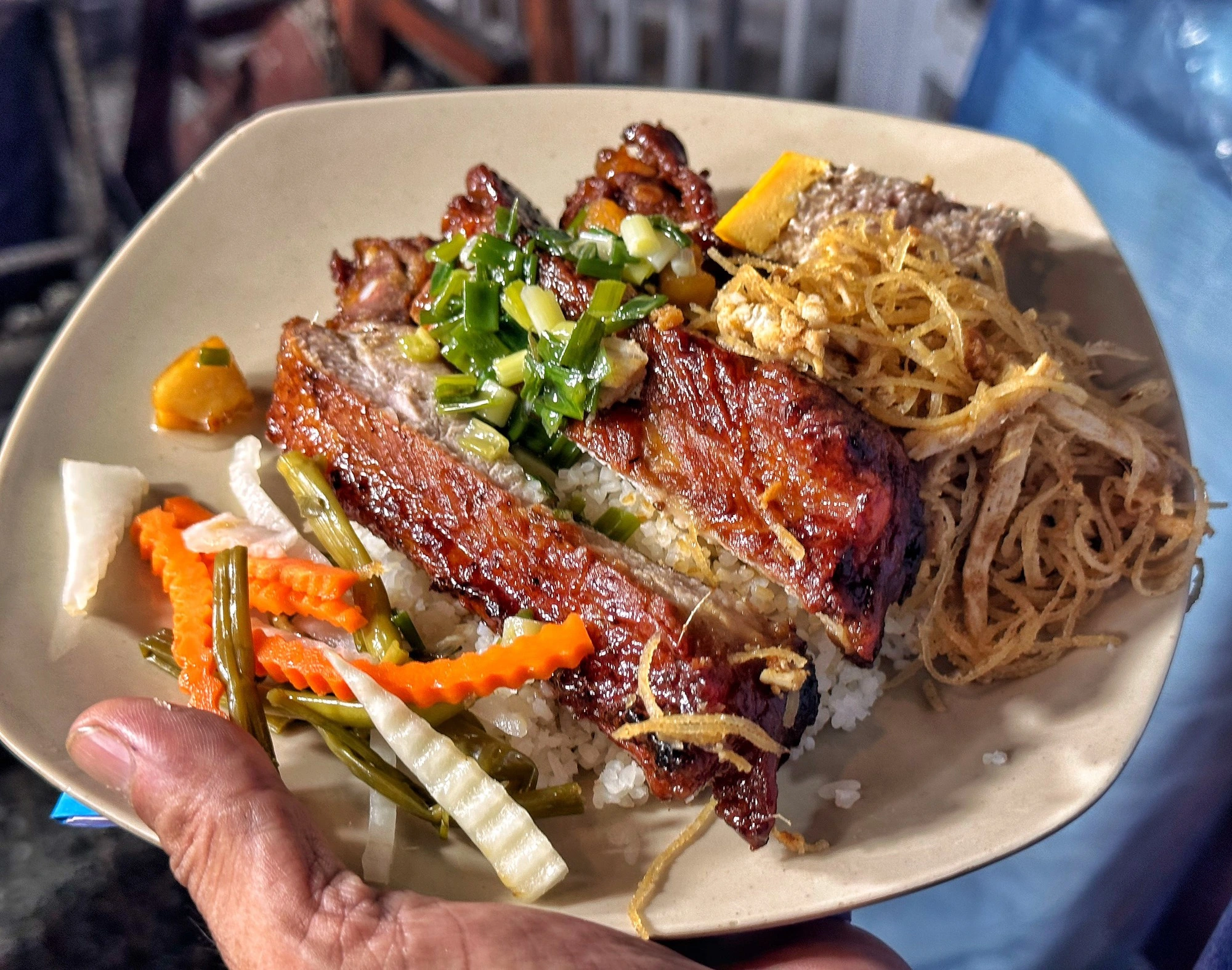
I always order the same thing. Sườn, bì, chả. Grilled pork ribs, shredded pork skin, steamed egg cake. Broken rice underneath, pickled vegetables on the side, a small bowl of clear broth to sip between bites. The uncle puts it together without asking. He already knows what I want. That's what happens when you go somewhere your whole life.
This is the kind of spot most visitors to Ho Chi Minh City never find. Not because it's hidden. It's right there on the street. But because the signals are different. No sign. No photos on the wall. No English anywhere. You have to already know what you're looking for. Or be with someone who does.
Why cơm tấm, specifically
Most tourists eat phở and bánh mì. Real dishes, nothing wrong with them. But if you want to understand what Saigonese people actually eat most often, it's cơm tấm. The name means broken rice. Smaller grains, slightly softer, and they absorb the sauce and the meat fat in a way that regular rice doesn't. The dish came from whatever was cheap and close to people's daily lives. It's still that. Just also very good.
Phở is northern. Bánh mì came from the French. Cơm tấm is just Saigon. so Saigon.
The combo matters too. Sườn alone is fine. But sườn with bì and chả. That's the whole thing. Grilled ribs, cold shredded pork skin with toasted rice powder, soft steamed egg cake. Every texture different, every temperature different, one plate. It's not complicated. It just took decades to settle into exactly this.
5 rules for finding real Vietnamese street food in HCMC
Rule 1: Look for the smoke and the crowd
Street food in Ho Chi Minh City announces itself. If there is a charcoal grill, there is smoke. If the food is good, there are people. Those two things together are more reliable than any app or blog post. I have never found a great Saigon street food spot by reading a review. I've found hundreds by following my nose down a street at 9pm and stopping where other people stopped.
The smoke from a cơm tấm grill is specific. Slightly sweet from the marinade on the pork. You can smell it half a street away on a still night. Follow it.
Rule 2: Watch for the regulars
Look for the people who don't look at a menu. Who sit down and just wait because they already know what's coming. Who call the auntie by name and ask about her kid. Regulars don't go back to average places. Same group, same table, every Tuesday at 10pm. The food is why.
At the District 10 spot, there's a group of older men who come late. Same table every time. They eat fast and quietly. Nobody performing for anyone. When you've been going somewhere twenty years, there's nothing left to explain.
Rule 3: Trust the person who has been doing this for two decades
The uncle on Nguyễn Tri Phương has been making cơm tấm longer than I've been alive. Possibly longer. He's made this dish thousands of times. He is not experimenting. He's not trying to surprise you. He's just very, very good at one thing, and he shows up every night to do it. That's the kind of cooking worth finding.
The opposite is a place with thirty things on the menu, all of them okay. One thing done with that kind of depth is just different. In Vietnamese street food, obsession beats variety.
Rule 4: Late night spots are usually the most honest
The places that open at 9 or 10pm and run until 2am aren't surviving on tourists. Tourists are asleep. The customers are locals: people coming from second shifts, from long evenings with friends, from the kind of days that end with wanting something good and uncomplicated. The pressure to perform for outsiders isn't there. What you get is food made for people who eat it regularly and know when it's right.
Cơm tấm on Nguyễn Tri Phương is a late-night spot. That's part of why it tastes the way it does. Not trying to be lunch, not competing with anything. Just being what it's always been. Late and quiet and warm. so reliable.
Rule 5: If there's a laminated English menu, walk on
A laminated menu tells you something. When a restaurant goes to the trouble of printing plastic-coated menus in three languages with photos, it's made a choice about who it's cooking for. That's fine. But the spice adjusts, the price goes up, and the regulars have mostly gone somewhere else.
You can still find good food in those places. Just know you're in a different version of the city. Built for visitors. Not the one people actually live in.
Why most visitors to Ho Chi Minh City miss this
When you're in a city for three days and you don't speak the language and you're tired from travelling, you eat where you can point at a picture. Makes sense. The tourist strip exists because that's a real need. But most short-stay visitors end up eating the softened, signposted version of Saigon. You can have a good trip that way. You just won't understand what the city actually tastes like.
The real Vietnamese street food isn't harder to find. It's just quieter. It doesn't have signs. It relies on people already knowing it exists. And it's been there long enough that it doesn't need to explain itself to anyone.
The District 10 spot, and why I still go
I still go to Nguyễn Tri Phương. Not always late at night anymore. But the uncle is still there. The smoke is still there. The plastic chairs are still slightly wobbly. The bì is still cold and the sườn is still charred at the edges the way it should be.
When I'm tired and I want something that feels like home, I go there. The uncle got it right a long time ago and he doesn't need to change anything. Some cooks are like that. You don't need to explain why you keep going back.
I run small food walks in Saigon through Spring Saigon Tours. The tours aren't really about food. They're about learning to read a city. The smoke, the regulars, the solo operator who's been at the same corner for two decades. The cơm tấm is just the reason to stop and pay attention.
If you want to skip all of this and just eat where I eat, come on one of my tours. Small groups, max 6 guests. Places I've been going my whole life. That's it.
Or work through the full list yourself in the Saigon guide, dozens of dishes with a checkbox next to each.
I run small food walks in Ho Chi Minh City. Come walk with me.
Book a tour with Spring →Why book with Spring Saigon Tours
Spring Saigon Tours runs small food walks and city tours in Ho Chi Minh City. Spring is a Saigon native who has been eating her way through this city her entire life. Spring Saigon Tours has 2,700+ reviews across Google, TripAdvisor, Airbnb, GetYourGuide and Viator.
Tours are small on purpose. Max 6 guests for group walks. Private options for couples and small groups who want the city to themselves. No scripts, no laminated menus, no softened version of anything.
The people who come aren't really customers. They're just the friends Spring hasn't met yet.
Questions people ask
Where can I find the best cơm tấm in Saigon?
There's no single best spot. Every district in Ho Chi Minh City has one or two cơm tấm places that locals have been going to for decades. The rules are the same wherever you look: smoke, regulars, one person who has been making one thing for a very long time. The Nguyễn Tri Phương area in District 10 has a strong late-night scene if you want a starting point. Go after 9pm. Follow the smoke.
Is street food in Ho Chi Minh City safe to eat?
Generally, yes. Saigon street food vendors survive almost entirely on repeat local customers. If a spot is busy with people eating there multiple times a week, the food is clean. The practical rule: busy means fine. The risk is actually higher at tourist-facing restaurants, where the accountability from a regular clientele isn't there. Eat where the locals eat and you will almost certainly be fine.
What's the difference between cơm tấm in Saigon and other Vietnamese cities?
Cơm tấm is a Saigon dish. You'll find versions of it elsewhere in Vietnam, but the origin matters. The broken rice here is softer and more fragrant. The standard combination, sườn with bì and chả, is specific to the south. In other cities you might find it on a menu but it won't be the same thing locals grew up eating. It belongs to this city the way pho belongs to the north. so distinctly Saigon.