
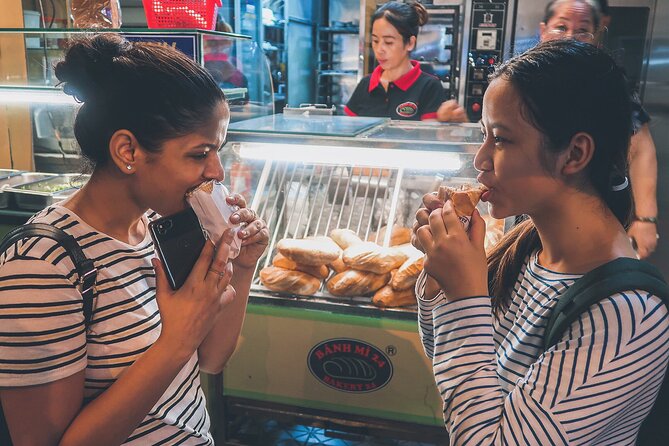
The Best Banh Mi in Saigon (According to Locals)
There's a woman who sets up on the corner of my street every morning at 6am. She has a charcoal grill, a basket of baguettes, and maybe eight things she puts inside. No sign. No name. She sells out before 8. I've been eating her banh mi for five years and I still don't know what she's called.
That's where the best banh mi in Saigon actually lives. Not in a ranking. On a corner. With a woman who doesn't need to advertise.
But I know that's not very useful to someone visiting for four days. So here's the real answer: there are places I'd take you, and there are things to look for so you can find your own.
What makes a banh mi good
The bread is everything. It should be thin-crusted, light inside, and still warm. Saigon baguettes are different from the French original: smaller, airier, more rice flour in the mix. When you bite in, it should crunch once and then yield. If it's dense or chewy, that's not Saigon style.
The second thing is the fat. Proper banh mi has pork fat paste on the bread. Real stuff. Not margarine, not butter. If a stall skips it to seem healthier, you'll notice. It tastes like something is missing, because something is.
The rest varies. Thit nguoi (cold cuts), cha lua (Vietnamese pork roll), pa-te, pickled daikon and carrot, cucumber, coriander, chilli. The combinations are endless. The quality is in the sourcing. Good pork roll from a vendor who makes it themselves versus a plastic-wrapped version from a wholesaler. You can taste the difference immediately.
Huynh Hoa. The one everyone should try once
Banh Mi Huynh Hoa at 26 Thi Sach in District 1 is the most famous banh mi in Saigon. It makes every list. I'm putting it here too because it's genuinely good. It earned that reputation.
The banh mi here is large. Stuffed in a way that makes you wonder how the bread holds together. Pate, three kinds of pork, the full set of pickles and sauce. They do one thing and they've been doing it for decades. The queue is real but it moves fast. Go before 9am if you don't want to wait long.
It's tourist-known, yes. But so is pho. That doesn't make it less good.
The stalls that don't have names
District 3 has good morning stalls on the smaller streets off Vo Van Tan. District 1 has them near the backpacker area on Bui Vien, though the ones a block off the main street are better. Phu Nhuan and Binh Thanh have entire corners that locals queue at every day before work.
What I look for: a charcoal grill or a small toaster (either is fine, cold baguettes are not). A line of regulars, not tourists. A woman who looks like she's been doing this since before you were born. If you see those three things, you're in the right place.
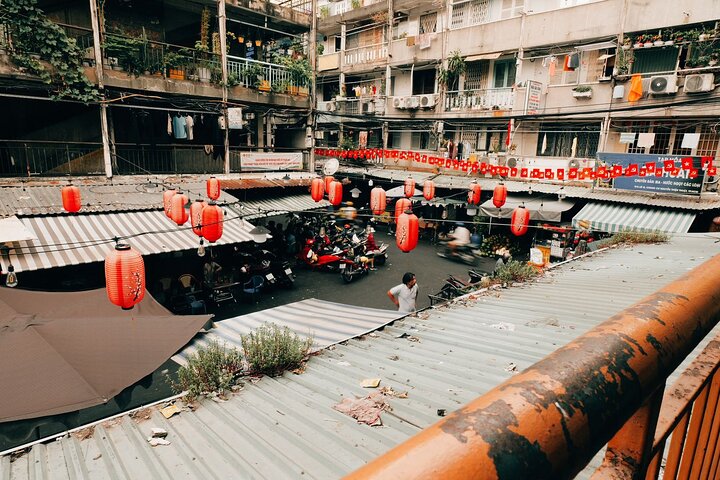
The alleyways and smaller streets off the main roads. That's where most of the good eating in Saigon is. The banh mi is no different.
How to order
Point at what you want. "Mot cai banh mi" means one banh mi. Hold up one finger. The vendor will know. They'll ask you things in Vietnamese, gesturing at options. Just nod or shake your head. You'll figure it out.
Don't ask for customisation on the first visit. Just take what they make. That's what everyone does. Once you see how it comes out you can gesture at what you want more or less of next time.
Price is somewhere between 15,000 and 40,000 dong depending on where you are and what's inside. If a street stall charges more than 50,000, you're paying for the location, not the banh mi.
The honest version
I've eaten banh mi at the fancy places and I've eaten it standing on my street at 6:30am. The best ones I've had have almost always been the second kind. Not because expensive is worse. Because the good ones on the street have been doing this for a long time and they care about their regulars.
If you're in Saigon for more than two days, find the morning stall nearest to where you're staying. Go twice. By the second time she'll probably already know what you want. That's how the best banh mi in Saigon works. it finds you, if you let it.
More where that came from in the Saigon eats guide.
On my morning food walks we stop for banh mi the way locals actually eat it. Early, standing up, with good company. If that sounds like your kind of morning, come walk with us.
Book a tour with Spring →Why book with Spring Saigon Tours
Spring Saigon Tours runs small food walks and city tours in Ho Chi Minh City. Spring is a Saigon native who has been eating her way through this city her entire life. Spring Saigon Tours has 2,700+ reviews across Google, TripAdvisor, Airbnb, GetYourGuide and Viator.
Tours are small on purpose. Max 6 guests for group walks. Private options for couples and small groups who want the city to themselves. No scripts, no laminated menus, no softened version of anything.
The people who come aren't really customers. They're just the friends Spring hasn't met yet.
Questions people ask
What is banh mi made of?
A Vietnamese baguette, usually filled with some combination of pate, Vietnamese pork roll (cha lua), cold cuts, pickled daikon and carrot, cucumber, fresh coriander, spring onion, chilli sauce, and pork fat paste. The exact combination varies by stall. Some do just a few things really well. Some pile everything in. Both can be excellent.
Where is the best banh mi in Saigon?
Banh Mi Huynh Hoa at 26 Thi Sach, District 1, is the most celebrated and is genuinely worth trying. For something more local, look for morning stalls in residential neighbourhoods before 8am. District 3, Phu Nhuan, and Binh Thanh all have good corners. The best one is probably the one nearest to wherever you're staying, if you're willing to find it.
How much does banh mi cost in Saigon?
Between 15,000 and 40,000 dong at a street stall, depending on the fillings. Around 35,000 to 50,000 at the more established places. It should be cheap. If you're paying more than 60,000 at a street-side spot, you're in the tourist zone.
Is banh mi a breakfast food?
In Saigon it's mostly a morning thing. Most street stalls open around 6am and sell out by 8 or 9. You can find it at other times of day, but the morning is when the bread is fresh and the crowd is real. That's the version worth eating.